Anafanya Kazi kwa Bidii

A friend of mine (different friend from the one in the prev blog, “Best Way to Eat Easter”) was one of the original youth who Tarime UMC worked with when they started their outreach for children and youth living on the streets (called Our Father’s House), in 2012. After a few months of getting to know him, the Church started to do family counseling so that he might return home, advised him to stop stealing phones and scrap metal, and tried to get him to return to school, even being ready to buy school uniforms. They made a little progress with him- he started living with his mother for short periods- but on the whole, he wasn’t interested. He kept stealing, and refused to return to school.

After a few years of this, the Our Father’s House staff saw that they were investing a lot of time in my friend, while ignoring other youth. Since he refused their help, they decided to focus on the other youth on the streets, who were headed down the same bleak path.

One day last November, five of the Our Father’s House youth started working with the brick business. On the next day though, only three of the five returned. I asked Mwita (Our Father’s House director at the time) what happened, and he told me that folks were telling them not to work there, because stealing scrap metal paid better. It turned out that one of the folks giving this advice was my friend.

We found two youth to take the place of those who had followed my friend’s advice, and they worked steadily until mid-March, when one of the youth, Marwa, injured his arm. Until Marwa healed, I wanted to give his spot to a young man who had asked earlier if he could join the project, but he was in jail. It was late, and to our surprise, my friend requested the spot. We gave him the job for one day, and told him we would find someone else tomorrow.

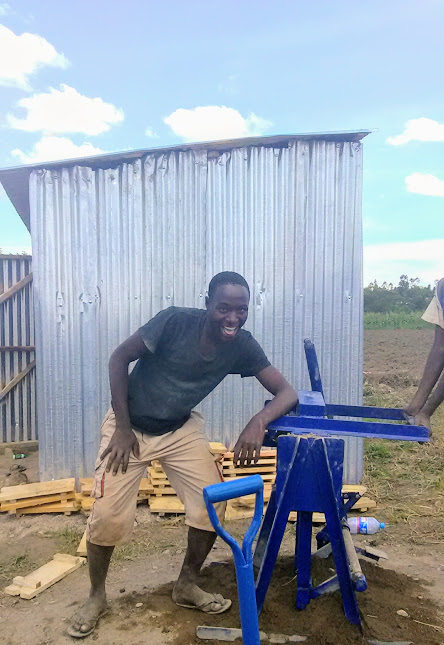
We were shocked when my friend worked harder than everyone else. Yusufu, the youth who had taken the role as supervisor, begged us to keep him on, at least until Marwa was healthy. We reluctantly agreed, and my friend kept up the same above-and-beyond performance (the title roughly means “He/she is working hard”).

We still intended to ask him to leave the project once Marwa’s arm healed. One day, though, we needed the youth to help stack up the bricks they had made. They were supposed to be doing this all along and had neglected it, so they had to do it without pay. By this time, Marwa had healed, but he refused to help, as did all of the other youth- except Josef Marwa, and my friend. My friend worked at his usual intense pace, surprising us all.

On May 11th, Mwita and I held a meeting with the youth. We discussed several different things, and one of them was whether to keep my friend on. We all agreed that he was working incredibly hard, and proving to us that he wanted a job, instead of continuing with his scrap metal theft. We all agreed to give him a spot.

I don’t want to give you the impression that this is the end of a beautiful story. We have seen some of these young folks on the streets change for a time, and then return to the life they left. We have a long way to go with my friend, but this is encouraging news for now.

James.png
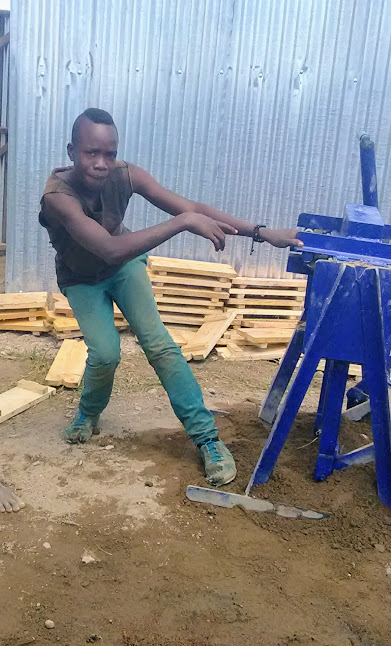
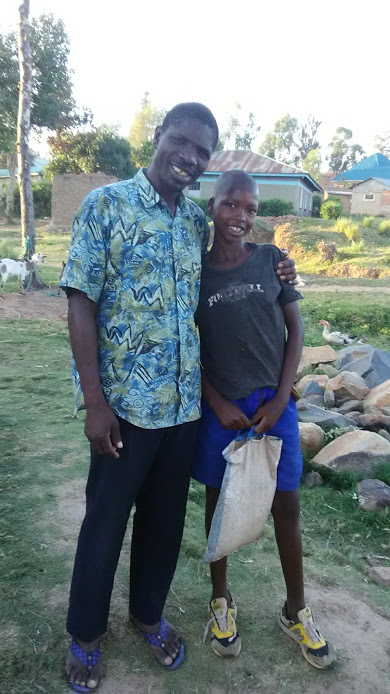
My friend anafanya kazi kwa bidii.

Finally, if anyone wants to sponsor one of these young folks as we either reunite them with a family, or to help them get a job and learn work skills through the brick project, you can let me know. Sponsorship is $40/month, and we could certainly do more and better work if we had more sponsors.
The Best Way to Eat Easter

I have a friend here in Tanzania whose mother is a prostitute*. This is the reason he has been living on the streets for years, and missed out on his education, and cannot read. He just finds it too challenging to live with her.

I don’t know how my friend feels about the fact that his mother hasn’t taken better care of him. I just assume that whatever he feels, he’s not real happy about it.

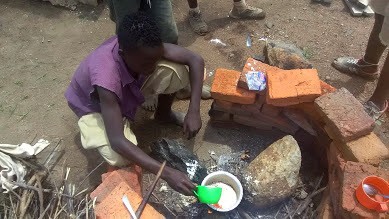
Our brick business has provided him with a job and skills training, and on March 26th, he asked to take out his savings after six days of brick-making. Moses, director of Our Father’s House, asked him what for. “To celebrate Easter”, he said. Normally, Tanzanians celebrate Easter by buying new clothes and shoes, so Moses agreed.

A week or so later I was in Tarime with Mwita, a volunteer who knows these youth better than anyone else does. We ran into my friend, and their conversation went something like,

Mwita: What news of Easter? I heard you travelled.

My friend: Yeah, I travelled.

Mwita: You went to Nyamongo?

My friend: Yeah, I went to my mother.

Mwita: To celebrate Easter together?

My friend: Yeah. On Saturday, I got some white potatoes and cooking bananas at the bus stand and got a car to Nyamongo.

Mwita: O wow! She was happy?

My friend: Yeah, she was happy.

Mwita: So you ate Easter with her? (This is a common Swahili expression, just means “enjoyed Easter…”)

My friend: Yeah, she cooked the potatoes and bananas and we ate Easter together.

Mwita: How long did you stay?

My friend: I returned to Tarime Monday morning.

I was thankful for the brick business, so that my friend could do this for his mother without stealing a phone or scrap metal. I was more thankful, though, for my friend’s heart. After all the trouble that he has had with his mother, he still loves her. It reminded me of another story, one that starts with “In the beginning God created the heavens and the earth…”

* I don’t know his mother’s story, and I’m not wanting to paint her as black-hearted here. It’s an awful fact of life in Tanzania that many (at least 1 out of 50) females find themselves being forced into prostitute-type behavior from a young age. Some of you may have heard this story, but in posting it on social media, I wanted to keep his name out of it. That is why I simply refer to him as my friend.

“Naweza”

I am thankful that the Our Father’s House brick business has given a job to five youth who have a bleak future due to missing out on their education. Our plan, though, is for these youth to supervise and make the everyday decisions of the project, not just to work for it, and this transition will be made by September 1st. This is a long way for these youth to go, so I was delighted by a certain conversation that we had back in March when I was meeting with Mwita (a volunteer who has worked with these youth for years) and Kagose (a professional builder who works with the project).

Davis: So, what if two youth worked each day, as in Sam and Marwa one day, Josef and Yusufu one day, until we finish the last 200 bricks?

Mwita: Aaahhh, yes, that is a good idea. We’ll pay 10,000/day, and we’ll be able to finish the 200 bricks with the last 30,000.

Kagose: Yes, this is a good idea, but one thing; two youth can make 80 bricks in a day if Yusufu is there, but if he isn’t there, it will be difficult.

Davis: Oh, so Yusufu has more strength?

Kagose: Well, he does have more strength, but the main reason they can make more bricks when he is there is because he takes the work more seriously and gets them to stop playing around so much.

Davis: Oh. Well that’s really good news.

Kagose: Yeah, I think what we could do is to have Yusufu and Sam one day, Yusufu and Marwa the next day, and then Yusufu and Josef the third day. That way, we’ll finish the last 200 bricks. They’ll only need to make 40 bricks on the third day.

This plan worked as Kagose predicted, so I suggested that Yusufu take over as site supervisor starting April 1st. Kagose agreed that he should be able to do this, so we asked Yusufu if we could have a quick meeting with him.

As all four of the project leaders pulled up chairs to talk to him, Yusufu tried to look cool as always, but it was clear that he was nervous.

“Yusufu”, I began, “Kagose told me that you put your heart into your work, more than the other youth. When you work hard like this, the other youth also work harder. Kagose also said you get them to take the work seriously. We intend for this project to be in the youth’s hands, so we are going to be giving all of you responsibility little by little. Do you think you will be able to start doing the work of site supervisor on April 1st? Since this is a increase in your responsibility, we will increase your pay. I know this is a lot of responsibility, so how do you see all this?”

Yusufu softly, but confidently, replied, “Naweza” (I am able), and smiled.

BrickYusufu
This is Yusufu. They have a long way to go, but we are happy to see the youth taking ownership of their project.

Never saw myself on the management side…

I never saw myself on the management side of a strike. When I came to Tanzania to serve people who are suffering, I thought that I had moved about as far away from that as possible.

But that’s where I found myself on March 10, 2018.

The young men who work for the brick project had shown up for work on the day before, but had decided that the work was too much. They wanted to return to the previous pay scale, where they were paid a flat rate. They had quit working and returned to the streets.

It was a strange feeling to have worked so hard to help these five young men, and then have them complain that we were treating them unfairly. These five folks are just as real as me though, and if all five of them see the world differently from me, then that’s good evidence that I’m missing something.

So I talked to the Tanzanians who are supervising the project, and we decided to listen to the youth. We met in the Church, the youth sitting across from us in plastic chairs, the four of us on wooden benches.

“The work is hard, and the money is small”, they began. Why couldn’t they return to the previous pay scale, instead of being paid per-brick? Could they have gum boots and gloves? And carrying that heavy machine back into the shed each day gets old. Can they save money by cooking for themselves instead of us paying a cook?

Mwita, a volunteer who has worked with these youth since 2012, took the lead in replying. He explained that this project had been started with a grant from a Church, but the project was meant to be a self-sustaining business. They had been paid a flat rate from the grant during the training phase, as they learned how to use the machine. This rate had often been greater than the market value of the bricks they were making. That was fine in the training phase, but now that they have learned make the bricks, we can’t keep doing that, or the business will run at a loss and die.

Mwita also knew that these young men were suspicious that we were going to be making a killing off of them. So he proceeded to show them how much the bricks sold for, and exactly where every shilling was going, so they would see why we cannot afford to increase their pay right now. A couple of us lent our phones so that 2 of the better-educated youth could run the simple calculations themselves.

We embraced the idea of them cooking for themselves, and showed them how much more they would be making with this change. We also explained to them that their pay would be going up next month, as they learned to supervise themselves and our current supervisor’s paid position became unnecessary.

At the end of the meeting, everyone was happy, including me. I was thankful that we had decided to listen to them and respond to their concerns.

Since then, they have steadily increased from making 120 bricks in a day to 200 in a day. On two of the last three days of work, they worked well without supervision. After the cooking change and the production increase, the money they make in a day has nearly doubled. On Monday the 26th, they were pretty excited to use the money they had saved to buy new clothes, shoes, and food.

Marwacookingeggs - Editedlotsofbricks - Edited

Tupate Watanzania kwa kuwezesha Watanzania

Hello friends! I crossed the border into Tanzania on February 16th, and I have been thankful to be back to work for the last three weeks.

I have also been thankful that the United Methodist Committee on Relief has sponsored a major scale-up of our savings and loan groups. We had been working on starting them at five Churches in the Mwanza region and seven Churches in the Mara region. Since receiving the grant on January 15th, we have expanded our work to seven Churches in the Geita region and eight in the Dodoma region as well. I couldn’t find them all, but this should give you a general picture of where we are working:

(Yellow markers= Churches we are working with)

Screenshot 2018-03-07 at 19.58.02

As I have tried to start these groups over the last eighteen months, the Churches have resisted, reluctant to participate in a program where they don’t receive money, Church buildings, or other resources that they expect missionaries to bring. Once the groups are started, they have expected me to make a large contribution. We have managed to get four groups started, but it has been rough going. We’ve compared our rocky start with the more successful savings group programs of other Churches in the area, and have seen how valuable it would be if we could hire Tanzanians to do the on the ground work that I have been doing. Good news- this grant has done that (the title means, “Let’s get Tanzanians to empower Tanzanians”). My role in the savings groups is now only to supervise the monitoring, and supervise the statistical evaluation of the groups’ success.

You may remember Mzee Steven Baruani from previous updates. He really took advantage of our program and expanded his hair dressing business. Upon seeing that he had really learned to focus on the resources he had, (instead of what he didn’t have), we hired him a few times to do some on the ground work. With the grant, we have now been able to hire him as coordinator for all five Churches in the Mwanza region. It’s been encouraging to see him go all the way through the program, from mired in the dependency mindset, to leading others into a new way of thinking.

Stevensuka

Quick update on the brick project- while I was away, the Tanzanians I left in charge were able to sell 300 of the 350 bricks that we had made, for 400,000 TSH ($176). More customers were interested, but we did not yet have enough bricks to meet their demand- a good problem for a business to have. Over the last three weeks, we’ve been working on getting up to the speed necessary to meet this new demand and make more sales.

Thank you for your kindness to the people of Tanzania, friends.


Tumaini kwa Maisha ya Baadaye

Hello, friends!

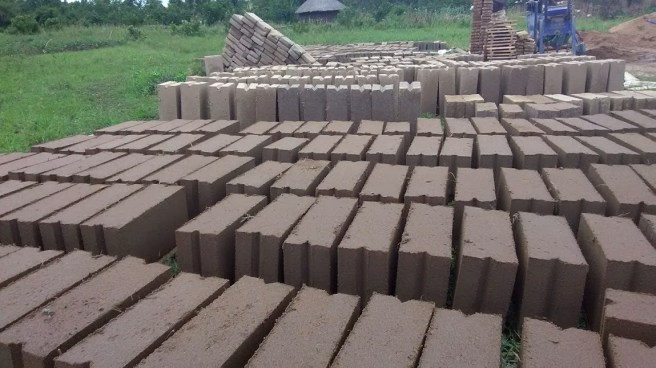
I’m pretty happy that the brick project is underway. We haven’t sold any yet, but I am happy that we are making bricks, so we can be ready to sell, cover our costs, build up profit, and use the profit to subsidize bricks for Church construction.

brickprojectbricks.jpg

I am even more happy to be providing a hope and a future to five young folks who missed their education due to living on the streets. (The title means, “hope for the later life”. Sounds strange translated directly, but this is how to express “hope for the future” in Swahili.) You can meet them here. These pictures were taken at their request, and they were insistent that I include their self-given, English nicknames.

Sam, Uncle Boy

brickSamson

Mwita (Mwita directs our efforts to reunite children and youth living on the streets with their families) met Sam on the streets during February of this year, and quickly learned that Sam lives with his father. They get along quite well, so Sam only goes to the streets when his father cannot provide for him. Unfortunately, these times are pretty common. Given their poverty, school uniforms are out of the question, which is why Sam has long stopped attending school.

Yusufu, Super The One Baby.

BrickYusufu

Mwita met Yusufu on the streets four years ago. Over time, Mwita helped Yusufu to learn to live with his elderly grandmother and leave the streets. Unfortunately, Yusufu hasn’t been to school in four years, and is too far behind to return now, so we are thankful to him a job and skills with the brick project.

Marwa, For the Business

BrickMarwa

After years of a difficult relationship with his mother, Marwa decided life would be better on the streets. When Mwita got involved in the life of Marwa and his mother, he wondered if a little bit of communication could go a long way, and advised Marwa’s mother to simply communicate with Marwa each day. Mwita also advised Marwa to seek communication with his mother, to push her on it, instead of just running to the streets when he got fed up. This has been working surprisingly well- Marwa has been back living with his mother for several months now. As with the others though, this challenging situation took several of Marwa’s school years, and he is now too far behind to return to school.

Matiko Justin, WCB Wasafi

(WCB Wasafi is Tanzania’s most popular record label.)

BrickMatiko

Mwita met Matiko on the streets four years ago. At the time, Matiko’s father was working in Nyamongo, a gold mine town 15 miles away from Tarime. His mother was buying fruit in bulk and selling it, and his older sister was unable to leave the house, due to frequent seizures. Matiko had left because he didn’t get along with the family. Mwita started meeting with Matiko, Matiko’s father, and his mother. After awhile, they all agreed that if they would work at communicating with each other more, the situation would really improve. And it did- Matiko has been living at home for the last two years. A pretty rough tragedy came to their family when his older sister drowned three weeks ago. Mwita and I attended the funeral, and we are hoping that this project can give Matiko something positive to focus on during this awful time.

Josef Marwa, Star Boy

BrickJosefMarwa

Mwita met Josef on the streets 3 years ago. Josef’s mother doesn’t do much to care for him, so Mwita tried to unite Josef with his grandmother. It turned out that the grandmother wasn’t able to provide for him, and didn’t even have a place for him to sleep, so he has returned to the streets. It was beautiful though, when, a few days ago, Josef visited Mwita to tell him that his mother is sick and he wants to go to Nyamongo to visit her. I’m hoping he will be able to make the trip.

Screenshot 2017-12-03 at 17.30.47.png

Finally, I’m also thankful that we have been able to provide Mama Eppy with some employment. We use a portion of the youth’s daily pay to pay her to cook for them. (I know it looks like I rudely took this photo while she was eating. I promise it was posed, and that she specifically requested that I take a picture of her holding some ugali.)

Mama Eppy.jpg

Thank you for what you have done to love these people.

#Ishirini-in-2018

Hello friends. I hope you have been happy lately.

Materially, a lot has happened since the last update. We dug a 30-foot-deep well. We built  bathroom.

brickprojectchoo.jpg

We made an rural, gully-ridden dirt road passable.

brickprojectroad.jpg

We slashed a bunch of grass and took out 10 or so bushes.

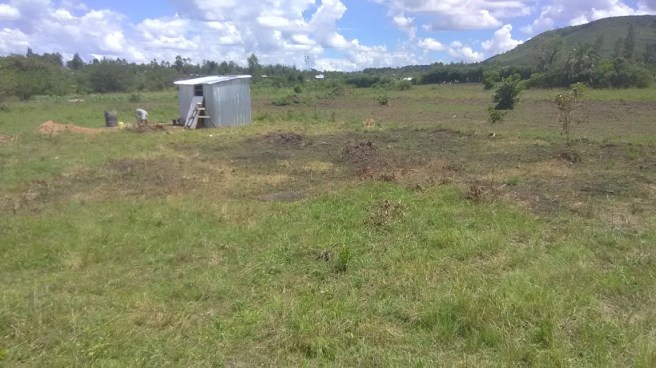
Brickprojectsite
Before
brickprojectsite.jpg
After

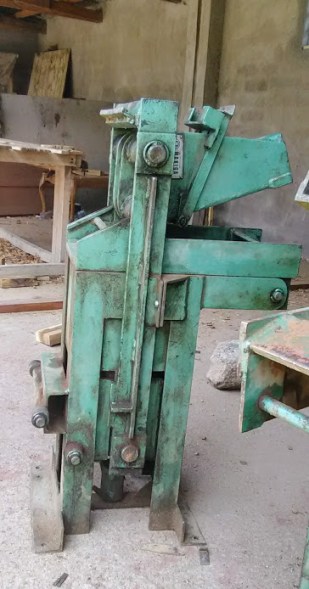
We got  a brick machine.

brickmachine

While this has been exciting, it has been important to remember that this is all just preparation for the stuff that really matters. Preparation to make bricks cheaper for Churches in Northern Tanzania. Preparation for giving a job and a skill to some youth who have lived much of their lives on the streets.

The stuff that really matters starts this week, when we train Yusufu, Marwa, and Josef Marwa, Justin Matiko, and Samson on how to use the machine. It starts when they start saving up money and learning a useful skill. It starts when they start to see hope in their future, and a chance to leave the streets.

When I first started to notice children and youth living on the streets, I remember feeling so sad for these folks whose parents had died so early. It never entered my mind that most of them might have living parents and other relatives.

But the majority do.

I live with Mwita, who oversees our efforts to return these children and youth to their families, and he has filled me in on the details on many of their lives. They find themselves on the streets because their father was in jail and their stepmother refused to feed them, or because their mother is a prostitute and is challenging to live with, or because their mother has an undiagnosed mental illness and won’t allow them to live with their father. Parents, step-parents, and grandparents come home drunk, or beat them, or give them a load of household responsibilities that they find excessive.

Some of the clearest joy I feel in Tanzania comes when I am walking down a street and run into a young woman or man who used to live on the streets. They smile, are clean-shaven, and have clean clothes or a school uniform on. I feel thankful to the family they are living with, whether it’s their birth family, or a new family that Mwita and the Our Father’s House folks found for them.

Faruku.jpg
Faruku, one of the children the Mwita and the Our Father’s House folks have found a home for.
Julius matiko.jpg
Mwita with Julius Matiko, another youth who he has reunited with a family.

In 2018, we are hoping to sponsor 20 more youth and children through this reunification process (Yes, that unfamiliar word in the title is Swahili for “twenty”). For the next few weeks, we will be sharing some of their stories, in case you are interested in connecting with one of them. Thank you for supporting these youth who will get skills and a job with the brick project, and like our page to stay tuned for their stories: #20in2018.

Anaye Leta Habari Njema

Hello friends.

Thank you for your kindness to me. I have been pretty happy lately to hear that Gabimori United Methodist has started their savings group. These groups normally stand or fall with the wisdom and dedication of their leaders, and Gabimori has some of the most mature, dedicated leadership of any Church that I have seen in Tanzania. Here is the Church’s Pastor, Musa Oguri, and the lay leader, Ibrahim Barnabas, is at top right in the following picture. I respect these two leaders most highly, and they also have several others- Tumaini Vitalis and Ochieng Esron to name a couple- who express an uncommon level of dedication to their Church.

GabimoriMusa

(Photo Credit: Glenn Glover)

20161023_130437

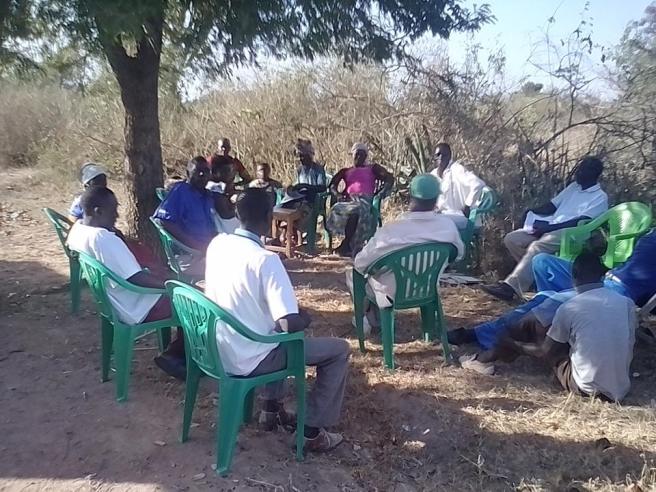
Therefore, I take the group to be in good hands. This is also a good place for a group- a fishing village, more remote than any other village that I have visited in Tanzania. They have consistent economic activity (fishing) to give them some money, but few ways to turn daily income into lump sums large enough to be useful, or to get an advance on future earnings when a need might strike. They manage their money by buying livestock, which has a few drawbacks- animals die often and can be stolen easily, are expensive to feed, and aren’t easily divisible. If you saved $25 (roughly similar to real goat prices in Gabimori) by buying a goat, and then you need $5 of the savings, you can’t very well sell 1/5 of the goat. You’ll have to sell the whole thing, and then find somewhere to put the remaining $20. The group is a safe, simple way for members to save each week, and once savings have built up over a few weeks, it will also serve as a loan resource, offering a stronger alternative to the livestock system. Here are a couple pictures of the group.

Gabimori Pamoja2

Gabimori Pamoja

We also were thankful to start the physical construction on the brick machine project, by starting the well-digging on October 14th (not a bad birthday present!) The man at center is the leader of the well-digging crew, starting the digging. Mwita, leader of our efforts to help the youth who live on the streets, stands to the front left, and the Village Chairman stands to the right.

Brickprojectwell

As of today, the well is now 22 feet deep. This well is different from the more well-known deep wells that supply enough water for a village community or school. Our only purpose for this well is to supply water for the brick project, and we estimate that a 33-foot well will do the job.

I left Tarime on Thursday afternoon for a short trip to Mwanza, and then received word on Friday morning that the shed for storing the materials was finished. As I’m still in Mwanza, I haven’t been able to take a picture of it, but I’ll post one as soon as I get back on Sunday.

On Monday, we will start the bathroom, and Mwita will get the youth who will work the project to clear the tall grass and bushes from the area where the project will be. I felt thankful to be here when I was able to tell Mwita to get the older youth ready to clear the area, since the project is starting. Because of their age, we have not been able to reunite these youth with their families, so they have been living on the streets. They have been spending many months stuck on the streets, wondering about their future, and a few days ago we were able to tell them that we are starting the project that will serve as a job and skills training. (The title means, “One who brings good news”.)

Thank you, friends, for caring about the people of Tanzania. Since you care about them, I was able to tell these youth that we are starting the project.

Wanasongea Mbele

Hello friends!

You may remember me talking about Steven Baruani in my last update. He’s a leader of the Lumala United Methodist Church who has grown his business since we started working with him. He has also been leaving the dependency mindset behind, so we wanted to entrust him with more responsibility. I was happy to see that he handled this responsibility – follow-up visits to two of the folks who came to the April entrepreneurship training – quite well. I’ll let him take it away.

Stevensuka
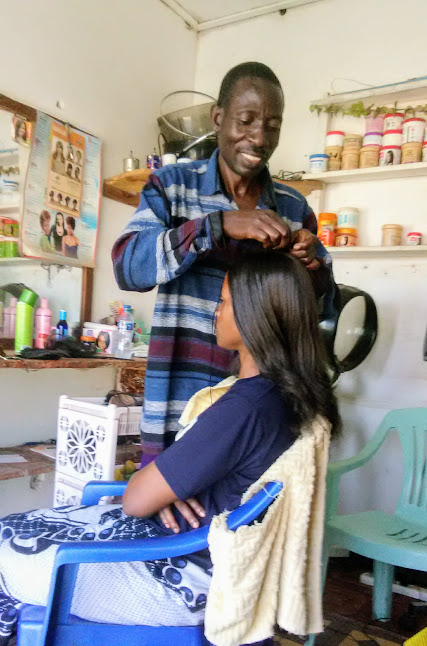
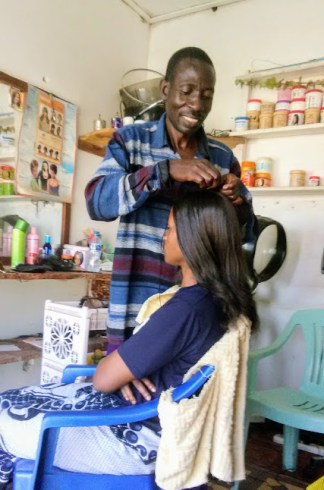
Steven Baruani, doing a customer’s hair
20170504_163409
Rajabu Masudi, member of Lumala UMC

Name: Rajabu Masudi

Steven: Have you started doing business?

Rajabu: Yes. I was selling phone lines. I stopped that work because there were so few customers. Right now, I have decided to do a soap business.

Steven: How much will you need to start?

Rajabu: I will need 40,000 TSH ($18). When I sell, the total will be 80,000 TSH ($36). Profit will be 40,000 TSH ($18). I have already started business of selling women’s shoes. I started with 150,000 TSH ($66.84). I actually just arrived with the shoes today, and I haven’t yet counted how many there are, but I expect if I sell them and don’t have any problems I will get a little over 300,000 TSH ($133.68).

Steven: Why do you think you have succeeded in doing business?

Rajabu: Because of the training I have received from CCMP and Pamoja. (These are our asset-based community development and savings and loan group programs.)

Steven: What do you like about doing your business?

Rajabu: I want to be a big businessman. I’m increasing my wealth and I’m able to help my younger sister pay her school fees. I’m searching for more market, even in the villages. For example, I noticed when I was in Dar es Salaam that they don’t have minnows to eat. Therefore, after I finish selling these shoes, I would like to start selling minnows.

Steven: What are your challenges?

Rajabu: Finding a market for the product. Many people are selling shoes, so it brings the price lower.

Steven: How has the training helped you?

Rajabu: It helped me to come up with ideas for doing business that are different from the ideas that other people have.

Steven: Where are you expecting that your business will be done?

Rajabu: I don’t have a great place to do business, so I will go to the customers. I’ll go to different shops, offices, houses, even to the believers at our Church

20161018_151116
Musa Songoro, member of Lumala UMC

Name: Musa Songoro

Steven: Have you started business?

Musa: Yes, I have started business of buying fish and selling. I’m letting my wife manage the business. We started with capital of 100,000 TSH ($45). From this, we have now gotten 300,000 ($135).

Steven: Why is your business succeeding?

Musa: We are succeeding because my wife and I are working together at our business. I am employed at another place, so I am taking care of the capital we need to buy the fish.

Steven: What challenges do you see in your business?

Musa: Sometimes we can’t get enough fish.

Steven: How have the CCMP and Pamoja studies helped you?

Musa: First, they helped me come up with ideas. They have given me confidence. They gave me this step, and now I can take another step.

Steven: Where is your market available?

Musa: We are selling fish at the Sabasaba market. My wife is well-known there.

Steven: What are you expecting from your business?

Musa: I would like, after I get enough money, to take fish from Mwanza to the villages to sell.

Steven: How are you using the money you are making?

Musa: For now, I have the challenge of paying for my child’s schooling. He is studying at a private school. I’m still building as well. I am building a house with two rooms, and I am paying my house rent. Once I finish building this house, I have the idea of opening a little store.

One understandable mistake that Steven made was where he asked about their challenges. Of course, it’s important to understand your challenges, but the folks at this Church are already quite focused on their challenges. We are trying to get them to move from focusing on what they don’t have, to what they do have. Steven understands this to a degree, but he still assumed that he should ask about them. I imagine it will come as a surprise when I explain to him that we are so interested in this mindset change that we don’t even want him to ask about challenges.

Aside from this small mistake, it’s exciting to see him taking on some of the responsibility of helping his Church out of poverty. As the title says, they are moving forward.

Thank you for all of your kindness to me, friends.

Wabongo kwa Wabongo

Before coming to Tanzania, I listened to the book Banker to the Poor three times. It’s the story of how an economics professor, Muhammad Yunus, made microlending work for thousands of the poorest women in Bangladesh. I’ve seen that several things he does are helpful to me here as I work with these folks on leaving poverty. Surprisingly, making loans directly to impoverished women isn’t one of them. It worked well in Bangladesh but doesn’t work well in Tanzania. We’re using a microfinance plan that has little in common with Yunus’ direct lending strategy (see my blogs Hisa or Hadithi ya Asteria for an explanation).

One thing Yunus did that is directly applicable here was that he trained, mentored, and coached Bengalis (natives of Bangladesh) to be poverty fighters among their own people. On Tuesday, I had a meeting with Mzee Steven Baruani to do the same thing. He is a member of Lumala United Methodist Church who has been steadily growing his business since we started working with him, and he has come to understand our central ideas- focusing on what you have and leaving dependency. I asked him if he could visit two people who were at our entrepreneurship training back in April to see how their businesses were doing. I explained that he would be able to understand their situation better and get clearer answers. He laughed and replied, “Ahh, Wabongo kwa Wabongo!” (Wabongo is a term Tanzanians use to refer to themselves. “Ahh, Tanzanians with Tanzanians!”)

Stevensuka
Steven doing someone’s hair before our conversation.

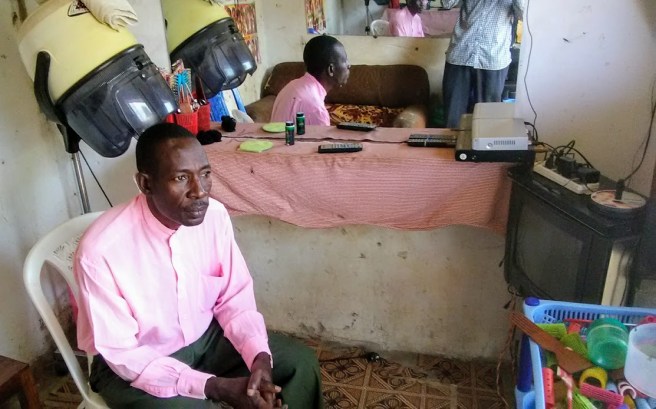
Speaking of Mzee Steven, I was happy to see that his hair salon is doing well and that he has decided to let his nineteen-year-old daughter manage it so that he can earn more by hiring himself out at another salon across town. (The salon across town is where the above photo was taken. Below, see pictures of him at his own salon.)

Stevensalon4.jpgStevensalon.jpg

Meanwhile in Tarime, I’ve been thankful to see some progress on the brick machine project. We’ve been working on the site plan, communicating with Good Earth Trust, a social business that sells brick machines (click here for more information on interlocking brick machines), looking at different machines, and setting final agreements on how much everyone will be paid and how much of the profit will go toward Church buildings. We’ve also talked with Mwita about which youth from the streets are old enough- at least 15- and cannot be reunited with their families. We are hoping these older youth can work the machine, while Mwita continues to work on reuniting the younger street children with their families.

IMG_20170828_164948
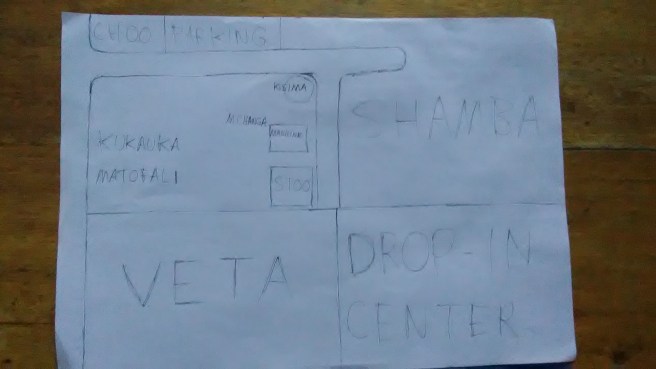
Hand-written site plan. We have met with a surveyor who is using it to make blueprints.

Brickmachine3Brickmachine2

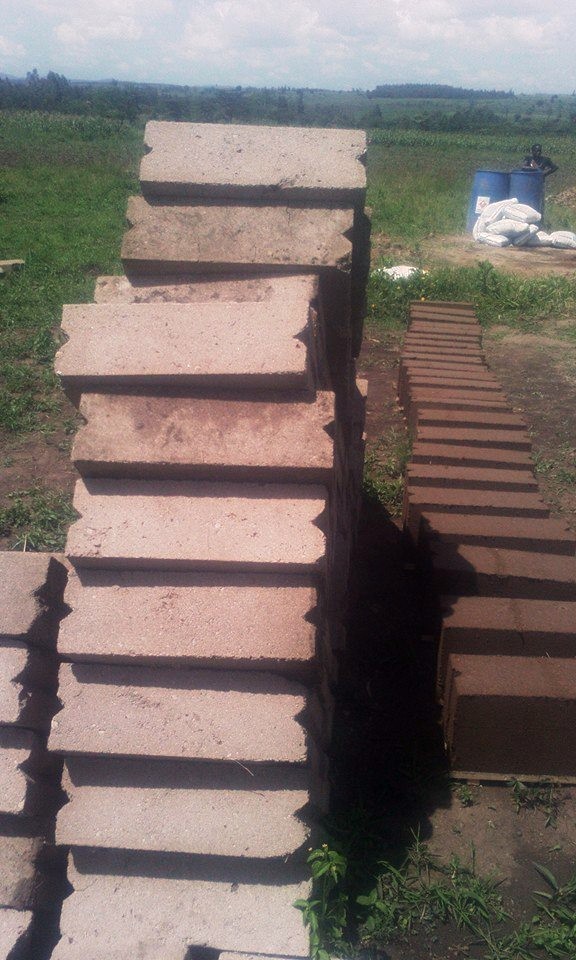
Machine on the left makes straight double interlocking blocks (directly below). Machine on the right makes wide format interlocking block (second below).

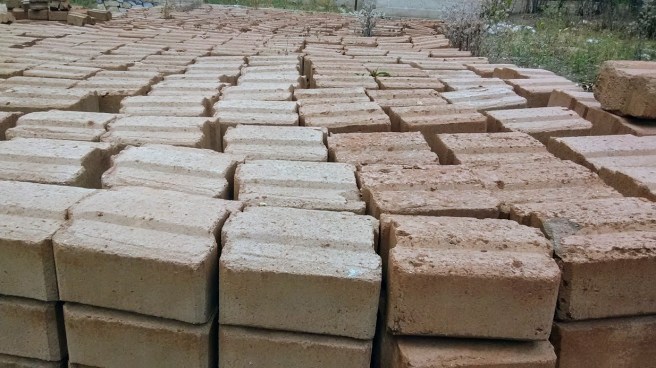
straightbrick.jpg

widebrick.jpg


Yunus, M. (1999). Banker to the Poor. Public Affairs.