Tunaendelea na Mradi

Hello, friends.

First, I want to apologize that this update on the work is overdue. Second, I want to let all of you know that I will be in the U.S. from July 14th until August 19th. You all have been so kind to me, and I would love to meet with any of you while I am around. That could mean speaking with your Church, or eating lunch or drinking coffee together. I’ll be in Mobile, Auburn, Montgomery, the Wiregrass, and Panama City areas for sure, and possibly in some other places. I am looking forward to seeing quite a few of y’all.

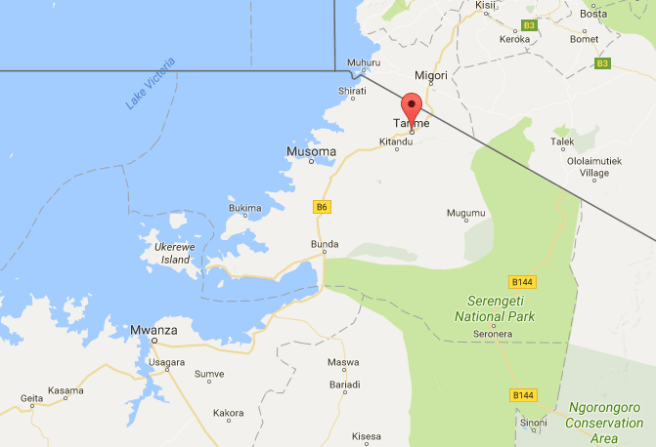
During March and April, I worked on getting the brick project started as a joint project shared by two Churches in Mwanza. As the weeks went by, I came to see that these Churches weren’t ready to receive the project, and that if the project was to be in Mwanza, I would need to be the one managing it. Since my role is to empower these folks to do their own projects instead of managing projects for them, we moved the project to Tarime. We are continuing to work through Asset-based community development with the Mwanza Churches, and eventually they’ll be able to start a project of their own.
Screenshot 2017-07-03 at 15.53.38.png
The project moved from Mwanza (bottom left) to Tarime.

In Tarime, the Mara District of the UMC will oversee the project. In Tarime, there is a UMC project helps the youth who live on the streets to resolve the conflict they have had with their families and to be reunited with them. A few youth who we are still trying to reunite with their families will be chosen to work the machine, which will give them hands-on training in brick-making. The project will still be used to provide bricks for Churches and Church projects, and will have the added benefit of helping these youth to learn a skill.

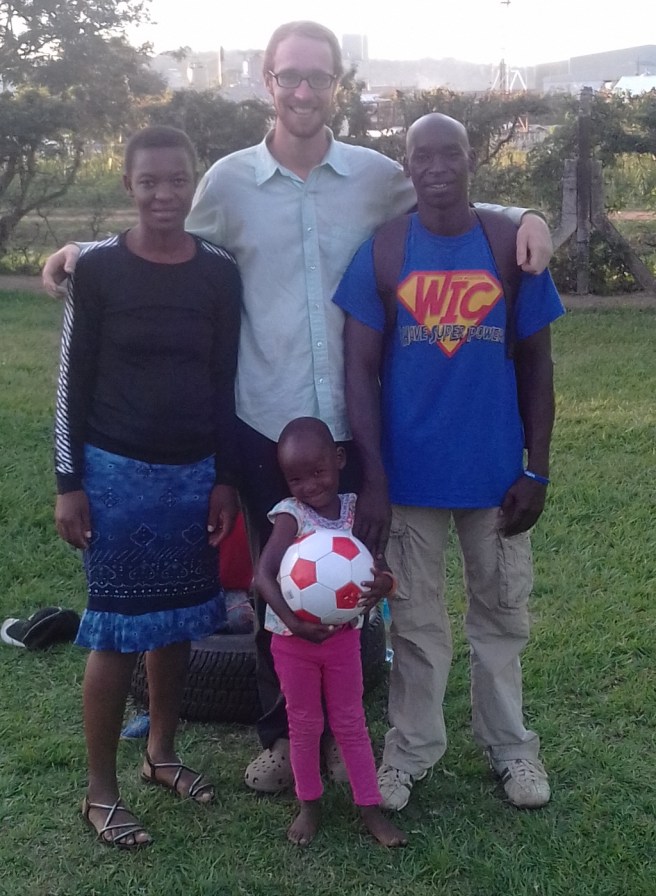
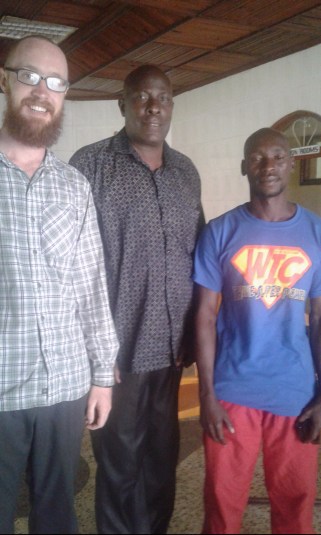
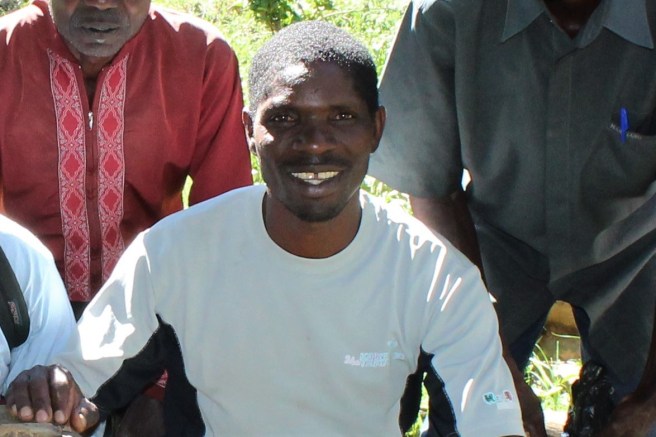
For four years, Baba Mwita Baita has been working on reuniting these youth who live on the streets with their families, and he will be the coordinator of the brick making. Mwita himself was kicked out of his house when he was in second grade and lived the next years of his life on the streets or bouncing around from house to house. As an adult, he fell into the domestic violence and alcohol abuse so common among men in the Tarime area, until he came to know Jesus through the growing United Methodist Church in the area. As we’ve been working together more, I’ve really enjoyed getting to know Mwita. When in Tarime, I stay at this house, and I feel at peace, thankful to have another Tanzanian friend. Each morning, I admire his excitement and commitment to go work with the youth on the mission of reuniting them with their families. He’s been pretty excited about the brick project, and normally finishes writing the budgets or work plans that we need in two days at the most. I’m excited to see where this goes.
Mwita3.jpg
Baba Mwita Baita

Mwita1.jpg

Brickprojectsite.jpg
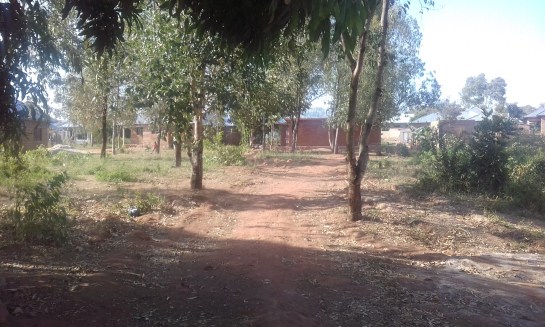
The land where the brick project will be
Brickprject.jpg
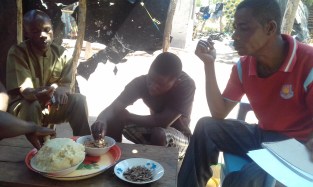
Some of the youth who we are working on reuniting with their families
Mwita2.jpg
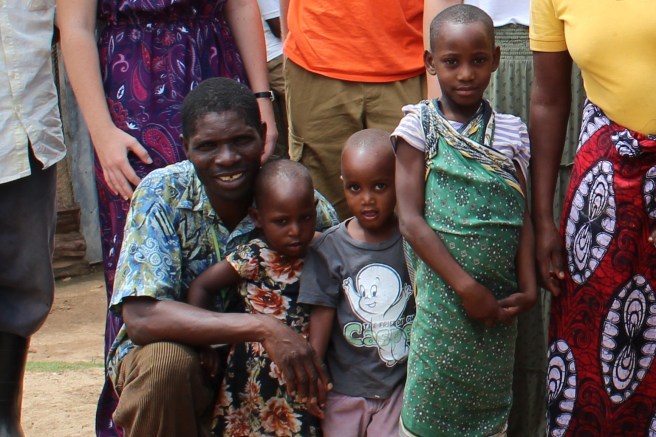
Mwita holding his daughter Sara. To the right is his daughter Maria. In the middle (Casper shirt) stands Mwita’s nephew Cristof, who Mwita took in after Cristof’s father turned abusive.

Njaa

Lately, I’ve spent several days visiting some of the church members from house to house and talking with them about what their lives are like. We want to know how they are doing with their material needs overall, and how they manage their money. We’re getting a “before” picture, so that we can later take an “after” picture and see the effects of the savings groups and asset-based community development work. Two things that will be evident from the “before and after” pictures:

  • Are you now more able to meet your physical needs?
  • Did the savings’ groups and asset-based community development help you?

Last year when I arrived in Tanzania, I realized that I had already invented a picture of what these people’s lives are like. Why did I do this? What evidence could it have been based on? I don’t know. The picture I had invented has not matched the reality. There’s a lot we don’t know about the everyday lives of these folks in the majority world. I hope you can learn a little bit about their lives from looking at some of the answers that folks gave me.

As I have met with more folks, I have been adding more questions. Here are some spreadsheets summarizing their answers, in order from earliest to most recent.

Masarura UMC

Ingrichini UMC

Pasiansi UMC

Buhemba UMC

Mika UMC

I’ve come to see a few things from meeting with these folks. They are at the mercy of the rain, which has not been predictable lately. The January harvest was weak, due to a lack of rain, and that means that these folks are trying to stretch their harvest as far as they can, and are therefore getting small portions each day. “Hunger” (“Njaa” in Swahili) was one of the most common answers I heard about important community events over the last few months.

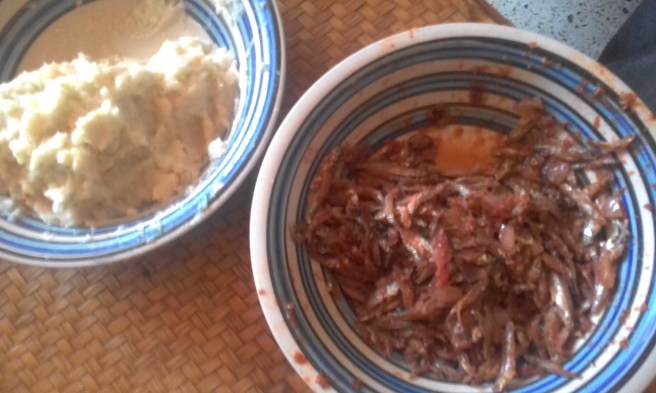
The most important crops are corn, cassava, and millet, which are all ground into flour and stirred into boiling water to make the Tanzanian staple, ugali.

20161029_145733
Ugali on the left.

Although many of the places look similar and the crops are similar, some areas are doing much better than others (compare Buhemba and Ingrichini).

Many of these folks save by buying animals. Many of them also do not sell any of their harvest, but instead store it and eat from it until the next harvest. Since this doesn’t let them build up any savings, they depend on contributions from neighbors in the case of emergencies (funerals and sickness being the most common emergencies).

20170415_122405
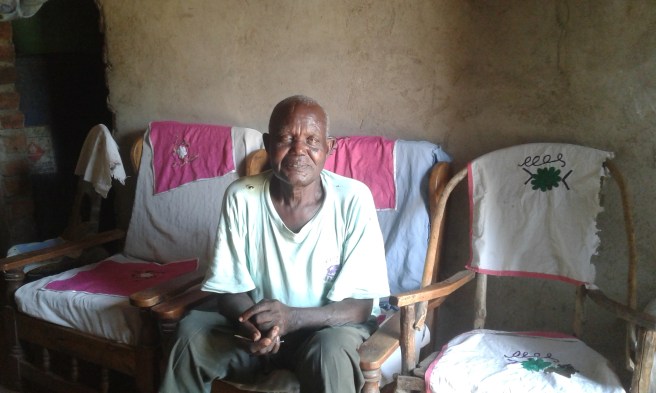
When I asked this Ingrichini elder how he saved, he immediately replied, “Cows are our bank” (“Ng’ombe ni benki yetu”).

Upgrading from a rented house or a mud and grass house to a brick house is what these folks see as the first step of getting out of poverty.

20170415_141749
The mud and grass houses look like this one in Ingrichini

Again, it’s a before picture. We’re working hard towards an after picture.

Mwaka Moja

Previously, I talked about the entrepreneurship training on April 3-6. I followed up with those who attended, but I didn’t expect them to have started yet. I thought I would follow up, encourage them to get going, and then wait until June to see some progress.

To my surprise, 5 of the 7 that I visited had already started.

  • Peter Manana (upper pictures) found a friend and they started a vegetable garden on a 20 x 5 meter piece of land that his friend’s father owned.
  • Rajabu Masudi (lower picture) started selling phone lines for 2 different networks. For each line, he makes fifty cents, in addition to a small monthly salary.
  • Mama Leah Augustino started buying fresh minnows at the lake shore and selling them at a market a few miles away. For each gallon, she makes $4 of profit. She has also started selling fried peanuts, and would like to start selling bar soap, once she gets $15 of capital.
  • Elder Steven Baruani found another elder who would pay for the materials for a small chicken house, provided that Elder Steven would do the work of building it. Now that they are finished, both men have the right to use the chicken house. Elder Steven is just waiting for a little money to buy a few chickens. They run about $5/chicken.
  • Elder Isaya Sango took a $20 loan from the Pamoja savings group to buy the materials to start making soap. He paid back the loan, and has now made $30 profit.

It seems that all of these folks already knew about these opportunities before the entrepreneurship training. What the entrepreneurship training seems to have given them is confidence. Apparently, this is all they needed to get going.

I also want to share some thoughts I have about this last year of serving in Northern Tanzania. (Monday, May 15th, was one year exactly. The title means “One Year”.)

I’m trying to live the same kind of life the Tanzanians live.

But am I just sacrificing efficiency? Would the Tanzanians prefer that I just get to work instead of worrying with living the same kind of life they live?

When folks ask me for money, I either say no or give them tiny amounts. I reason that the money I have was donated to me for the work I’m doing, and that this work will help them to provide for themselves.

But when I don’t give, I’m either depriving them of their immediate physical needs, or accusing them of lying about their needs. Can I be justified in depriving someone of their physical needs? And do I want to become a suspicious, cynical person who tends to believe that people are lying about their needs?

I don’t talk about Jesus much. I try to live like him, and show what a self-sacrificing servant leader looks like. Jesus gets talked about a lot in these churches, but self-sacrifice remains rare among the leaders.

But might it help them to hear it more clearly? Could that be why it doesn’t influence their lives, that Jesus isn’t explained enough?

When I don’t see quick results, I don’t feel too worried. Cross-cultural love is a long-term sort of love that takes years to mature and show results. If I focus on building a strong foundation, then the results will be much greater than they would be if I had worried about seeing results every few months.

Or am I a dreamer? Am I hiding from results because, well, it’s easier if you don’t have to be bothered by them?

I don’t write this to say, “Please tell me that I’m right”. These questions describe real areas of doubt, where I could change my mind. If you think I should change my mind, I’d love to talk with you over email, on Skype, or when I’m in the States. Thank you for listening, and for the times that you have prayed for me, friends.

Mwezeshaji Henri Kanyumi

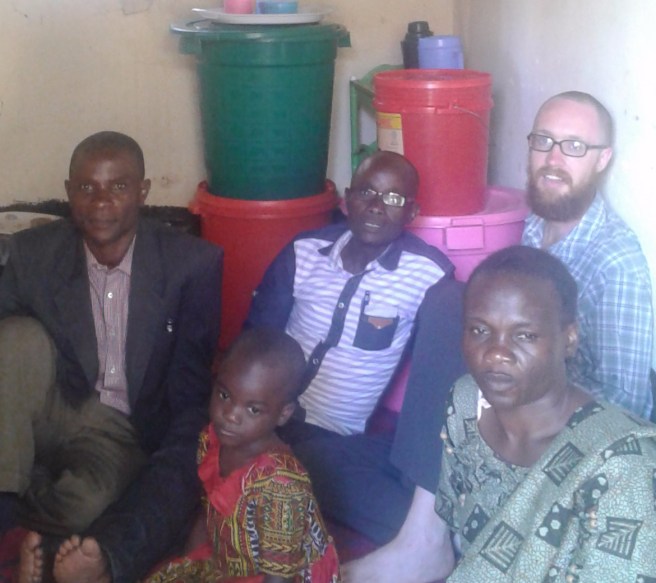
Far left in the picture below sits my friend, Pastor John Jeremia. Two weeks ago, I’m not sure if I would have felt comfortable calling him my friend. We weren’t really at odds with each other, but he is one of the pastors who I am working pretty hard to help, and, up until two weeks ago, he always seemed irritated with me. He had strong expectations for what a missionary should do, and I wasn’t meeting those. I hadn’t paid for land and a building for his church, I hadn’t bought speakers and a microphone for them, I wasn’t paying him a salary, and when he asked for money for food and medicine for his 5 children, I normally gave him 5000/= ($2.50), rather than the 20,000/= ($10) he asked for. John is honest, and each Sunday when I visit the church that meets in his tiny living room, I’m surprised by how determined he is. The thing is, we want to help build a Tanzanian church standing on it’s own feet.

20170326_172737.jpg
Far left- Pastor John, Upper Center – Church Elder Jeff, Lower Center, John’s child, far right, John’s wife. We are in the living room of the house I share with Zach. 

On Wednesday, August 19th, John met with me in town and asked me to buy a speaker for the church and to give him 20,000 for food for his kids. I gave him 4000 for food and told him that I wouldn’t buy the speaker. I also told him that Pastor Henri Kanyumi would be meeting with him and the church elder on Saturday, the 22nd, and that maybe that would help him to understand this a little better. Henri Kanyumi is a Tanzanian pastor who has helped many churches go from dependent to independent over the last 10 years, so we’ve brought him on board as a consultant (The title means, “One who empowers – Henri Kanumi”). Pastor John said he would meet with him, but he didn’t seem excited about it. He left me with the same disappointed “Haya” that I’ve heard so many times. (“Haya” is used in similar contexts as “See ya later”)

At this meeting (which I chose not to attend, so as to give them space to talk more freely), John told Henri about his frustrations with me, and about how he was working hard to keep his church alive, but that he was just really struggling. People didn’t want to come to a church where they were crammed in a tiny living room, and they also didn’t see it as a real church. Henri responded by asking John what would happen if Davis was to give him the money. Would that solve the problem? Pastor John admitted that it wouldn’t, and that as soon as the money had run out, he would ask for more. Henri asked if they were meeting the community’s physical needs, but John replied that whenever they gave people money, those people never returned to church. Henri explained that if the church was standing on its’ own feet and helping its’ members to come out of poverty, then this is what would help the church to grow. The community would see that the church was offering something new, not just the small handouts that you can get anywhere. Henri explained that he could help John’s congregation to become that kind of church, but that he would need patience; it will be a long journey.

Since that Saturday, I’ve been working with a different Pastor John. He is encouraged, smiles, and has stopped asking for speakers. Even further, he took the initiative to arrange a much-needed meeting of several church leaders in the area about the brick machine project. It feels so good to see that he trusts me, and makes me want to work harder, so as to not disappoint his new faith in me.

Tuondoke Utegemezi

When I was in America, many of you asked me what exactly we are doing here. A good question, since in these updates I normally talk about different aspects of the work, and it can be hard to see how they fit together. To clear things up

  • We want to help each Methodist church in the Mwanza, Mara, and Geita regions (22 in all) to have a savings and loan group.
  • We want to help each of these churches work through a process called CCMP which will teach them to start, fund, and manage projects that will meet their communities’ needs.
  • We want to start a brick machine project that will make bricks for the new meeting houses, as many of these churches do not have a meeting house yet.

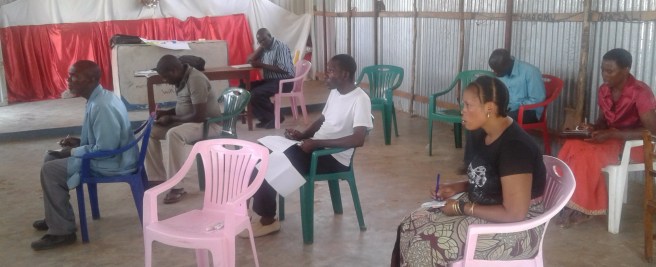
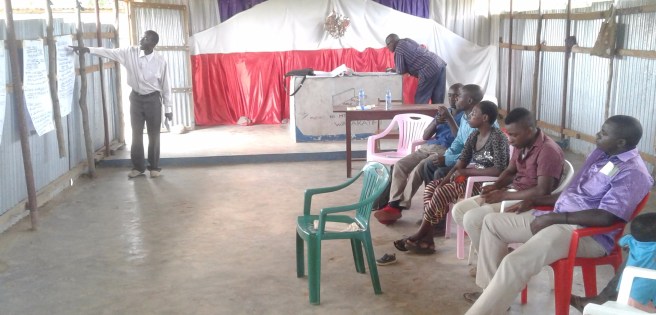
On April 3-6th, we did entrepreneurship training for 10 church members in Mwanza. One savings and loan group can now make loans, so we thought this would be a good time to train them on starting or improving their businesses.

If a few can start or expand their businesses, this will help all of them to leave behind their dependency mindset. This is what CCMP is all about – taking folks from focusing on what they don’t have and waiting on resources from the outside, to seeing what they do have, and learning to do their own projects. (Title: “We should leave dependency”)

We’re hope for a day when these folks take the initiative to organize themselves and then plan and fund a project to improve their lives and reach out to the community – a project that we could feel comfortable putting money into as well. A clinic? Farm-training center? English tuition center? It would be up to them.

We can’t do this now though, since it’s clear that the leaders expect us to fully fund and manage the projects. Many other missionaries have set this precedent, and the leaders have come to see themselves as unable to do this.

It upsets me to see such smart, hard-working, dedicated church leaders crippled by this mindset, and I wonder if it dates back further, to a time when colonial powers arrived who didn’t want Tanzanian leaders to trust their own abilities, and told them that they needed foreign powers to provide for them. I’m no scholar of African history, but Nobel laureate Wangari Maathai makes a strong case for this in The Challenge for Africa.

Regardless of the source, it will be tough for these folks to change their minds. Recall a time when you had a major mindset shift. After it’s over, the truth seems so obvious.”How could I have ever missed this? What was wrong with me?”, we say to ourselves. Before the shift though, changing our mind seems inconceivable. It’s the same here. From the outside, we think, “C’mon folks! You’re smart, you work hard, you value community, what could be more obvious than the fact that you are able to do these projects yourselves and don’t have to wait on outside assistance?” It doesn’t look that way from the inside though. Changing their minds will mean a hard choice to leave behind the worldview they have been comfortable with for so many years and step into the mists of the unknown, not yet knowing whether things will be any better. We hope we can walk alongside them on this journey.

Ujsmli3

Ujsmli1

Ujsmli2
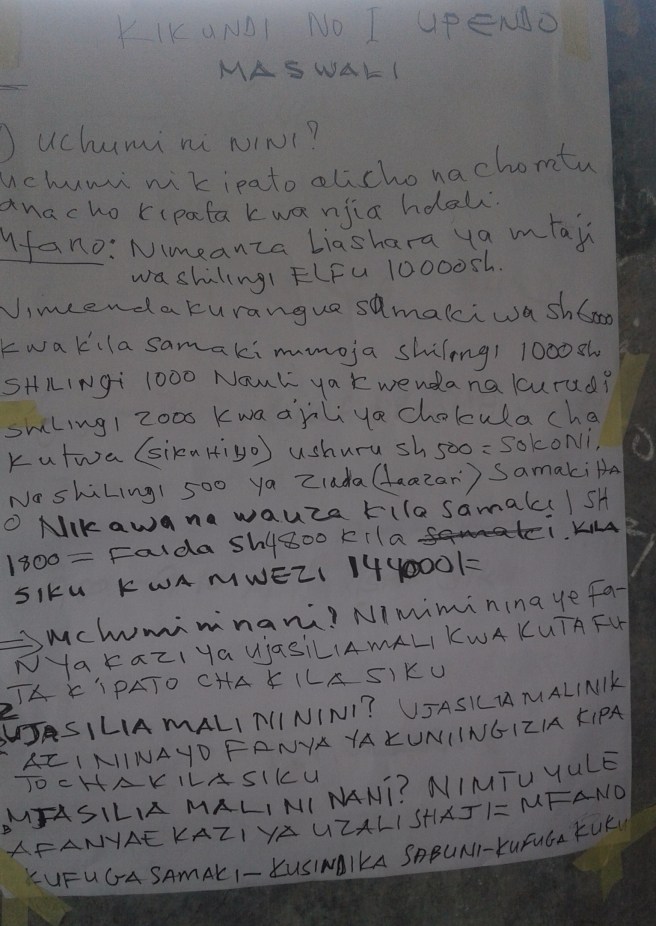
Sample business plan that one leader wrote, meant to explain the difference between the economy and the entrepreneur.


Hali ya Maisha Hapa

Hey friends!

I arrived in Mwanza on March 18th and have set back to the working with churches to help them meet their physical needs.

First things first. The Tanzanians were starting to call me Yesu. But Jesus was not white. I am also unlike Jesus in quite a lot of other ways.

Therefore, to prevent any further confusion…

20170325_110239

When I was close to finishing my undergrad double major in economics and philosophy, some people suggested that I get a master’s degree in economic development. I quickly decided against this, hoping instead to spend that time learning what it’s like to be a Tanzanian (The title means, “What the life is like here”). This seemed far more useful for doing effective economic development work.

I also recalled something that Eric Soard said (which he in turn got from Methodist Bishop Ntambo of the D.R.C.)  when asked about burnout; “The key is to stay in love with the people.” Well, it’s hard to love people who you don’t know.

Finally, when my father went to hear Bob Lupton speak (see Toxic Charity), one thing he took away was, “to be free from poverty, people don’t need a handout nearly as much as they need a good neighbor”. Unfortunately, there aren’t many good neighbors around, since those who can afford it normally move into nicer part of town, away from poverty, and the worse parts of town get worse and worse as they are separated from the rest of the city or village. (Shout out to one church actively trying to reverse this trend – Service Over Self and Christ UMC in Memphis.)

For these three reasons (as well as others) I have hoped to live with a Tanzanian family, in the same way that they normally live – no Marekani (American) modifications. That became a reality when I moved in with Zach, Benna, and Nerry Ouko on the day I returned.

20161214_182521

As for the work itself, on Wednesday (3/29) we explained the brick machine project to two churches in Mwanza that we hope can operate the project together. Reverend Henri Kanyumi helped us to explain it, since he is a Tanzanian pastor who has years of practice with opening churches and communities up to being self-sustaining. I was excited about how well he connected with the leaders. We were also thankful for that the District Superintendent attended the meeting, since the leaders look up to and listen to him. He also helped explain the need to move beyond letting missionaries do things for them, to the Canaan of learning to manage the projects themselves.

20170327_123709
Center: Henri Kanyumi   Right: My friend Zach
20170329_202624
Eating dinner with the Josef Ache, the superintendent.

The story continues. Thank you for being a part of it, friends.

Update on fundraising for 2017

Hey friends!

Quick update on fundraising and how you can give for 2017. Partially for the sake of transparency, but more importantly, because we will be able to do more if more is given in 2017.

Everything needed for the brick machine project has been generously given.

Personal expenses – You gave more than I needed in 2016. The excess has covered about a third of what I need for 2017. You have also given more this year as well, so I am in pretty good shape on personal expenses. Thank you for your kindness, friends.

Here is a list of what I spent money on in 2016: spending-summary-one-page

Here are my estimated personal expenses for 2017: personal-expenses-2017

We still need money for starting savings and loan groups, and for asset-based community development. Both have a solid track record in the area, see: Asteria’s story, tanzania-research-summarymay2014Ishishangh’oloManya ManyamaHisa. We will be working with the same folks responsible for these successes.

We need $21,200 to start this with 17 churches, as well as follow up with 3 churches where we have already started (roughly $1000 per church). About $3,500 of this is accounted for, though it’s only February. If less than $21,200 is given throughout the year, that does not mean we won’t be able to do anything. It means that we will be able to work with less churches in 2017 and that more will need to wait until 2018.

This money goes to a) bringing in Tanzanian consultants/facilitators who have already done these groups successfully b) food for the training events c) transportation to get our church leaders to the training events.

To give, you can follow this link: http://www.umcmission.org/Give-to-Mission/Search-for-Projects/Projects/3021923

Finally, I wanted to include some information on other charities in the area that are also doing good work, in case you find one there to be more excited about: Other Good Opportunities to Give to

Other Good Opportunities to Give to

From what I know about international development, these folks seem to be doing effective work. Many of them I even know personally and trust their wisdom.

GiveDirectly relays all donations directly to the extreme poor in Kenya and Uganda, no strings attached.

One Acre Fund gives loans and farm training to struggling African farmers in Tanzania, Kenya, Uganda, Rwanda, Burundi, and Malawi.

Lucy Wynn at The Micah Project is a friend who helps to care for and counsel street children, many of them battling addictions, in Tegucigalpa, Honduras.

Wesley College offers affordable training in both theology and economic development, primarily for Methodist pastors in Tanzania.

Amor, Fe, y Esperanza School is a school and med clinic for children who work in the trash dump of Tegucigalpa, Honduras.

Tearfund creates sustainable economic and community development programs, fitted to an area’s culture, that can be used by many churches. The plans we use for savings and loan groups, and for asset-based community development, were all developed by Tearfund.

You may think, “Okay. He’s told us about other opportunities to make us feel more excited about giving. I’ve seen Miracle on 34th Street. He knows none of us will actually give to any of them.”

That’s a valid concern, and I’m not sure what to say. I do feel sure that at least one of you out there is more excited about one of these than you are about the work I am doing, and I hope you really do give to that one instead of giving to us. Real, live people who I could name are suffering, and I want them to be happier. That’s why I’m in this sort of work, and I want things to change, regardless of whose hands accomplish it.

Nimesharudi Hapa Marekani

I returned to America on Friday (The title means “I have already returned here to America”), and I want to tell you about the work we did over the last seven months. I’ll try to tell it like a story, but I imagine it will feel more like reading only the opening pages. It feels the same to me. We’ll write a few more pages together after I return in March 2017.

Once I finished Swahili school in mid-July, I started visiting the church leaders and their families as much as possible, hoping to learn what their lives are like, hoping to see how they think, and hoping that we could come to trust each other.

20161016_125131

20160925_150423

20161015_165850

20161029_145713

On August 2nd, we started doing a weekly asset-based community development program. This program starts by explaining why the church should care about material poverty, then encourages the churches to build relationships with the community, then helps them identify the resources they already have, then teaches them how to make an action plan to mobilize these resources (For a case study, see Ishishangh’olo  or 3272-ccm-case-study-tanzania). As the leaders began to see their responsibility to alleviate material poverty, we brought in Henri Kanyumi, a Tanzanian pastor who has been doing development work with the churches in the Mwanza area for years. He taught them how to start savings and loan groups.

14088865_10157277757915375_2046036277_n
Henri Kanyumi, ladies and gentlemen. He really knows his stuff, as he has been doing Pamoja training for several years here in the Mwanza area.

From the beginning of September until mid-October, the churches searched for group members, and then started saving together. In early November, so many wanted to join the group at Lumala UMC that they decided to split into two groups of twenty members each.

savings-and-loan2
Lumala UMC savings and loan group meeting
savings-and-loan
Lumala UMC savings and loan group meeting


20161105_170626
Steven Baruani, secretary of the new savings and loan group, with the notebooks he will use to keep good records.


Through this period, I continued to visit the church leaders as often as I could, for the reasons listed above, but now with the added motive that it helped me to casually monitor the groups. Around this time, I started to see that many of these folks were less interested in being friends than I had hoped, and a lot more interested in what I could give them directly. This has intensified as the months have gone by, making me increasingly thankful for one Tanzanian family who have been consistent and faithful friends. Here I am with them: Zach and Benna Ouko and their daughter Nereah.

20161214_182521


Around mid-October, we hoped to build the shed and water source for the brick machine project, though we could not afford the machine yet. We didn’t want the site to sit unused for several months, so we asked the church to start a project  that would make use of the shed and water until we got the machine. The church made a plan for a garden project at the site, but it was clear that the church expected us to fund and manage the garden. We explained that this wasn’t the case, and that their plan needed to detail how it would be funded and managed. They made a new plan explaining the management but not the funding, so I told them they needed yet another plan. By the time we finished the final plan, it was time for me to leave, so we decided not to do the project.

We have seen the setting and rising action, and even in spite of the challenges, we have a good plan for the next year. I am looking forward to continuing the story in March.

I have tried to keep you informed about our work, but I would love to meet with you, explain more, and answer your questions, now that I am back in America. I will be living in Mobile, but will visit Montgomery, Auburn, and the Wiregrass often. I am looking forward to sharing with you, friends.

Ni Njia Mpya

Six weeks ago, I was thankful to visit the most remote church we work with, Gabimori UMC. To arrive, I travelled about an hour an a half by “small car” (they use “small car” to mean a car that works like a bus, rather than a taxi, always going the same route and waiting til full before leaving). After the small car brought me as close as it could, Musa (pictured below) took me another forty minutes by motorcycle to arrive at the village.

We have also been trying to start building the shed and “bomba” (water source) for the brick machine. While waiting for the machine, we hope Lumala UMC will use the shed and bomba to start a garden, which will increase their income, serve as a test of the church’s ability, and prepare them to manage a larger project.

20161124_172434
This is the plan for the shed, bomba, and garden.
20161019_135300.jpg
A bomba
20161020_083936
This is where the garden, and later, the brick machine and new Lumala UMC meeting house will be.

In the garden planning and in the visit to Gabimori, I have seen that the leaders are confused by our insistence that they take ownership of their development. When they see mzungu missionaries and hear “development work”, they expect us to pay for and manage large charitable projects. At Gabimori, the Mzee la Kanisa (Elder of the church, pictured above) asked me if we would build a health clinic. I said something like, “We would love to, but we cannot be the ones to manage it. Next year we will train the community leaders to manage projects, and then we may help them start a clinic.” He said that sounded good, but then asked the exact same question about a school, to which I gave the same answer. This was followed by yet another (identical) exchange about us building a soccer field.

When we were planning the brick machine project, I asked two of the leaders what project they could do with the shed and bomba while we were waiting for the brick machine. They said that they could do many different projects, but the problem is that I never want to pay for all the things that they request for the projects. They then tried to convince me to start a larger project by suggesting that I would get more money from it in the long run.

This confusion has been present in many cases besides these two recent examples. The leaders are disappointed by how slow the process is, disappointed that we won’t be providing as much money as they are used to, and doubtful of their ability to ever start and manage the projects themselves.

I am never sure what to say when we have these conversations. I have tried to explain how the old way created dependency, and also that this new approach (the title means “it’s a new path”) has already been effective with churches very similar to theirs in the area (you can click the following links to see more: ShinyangaNyangugeManya Manyama, Ishishangh’olo). At the end of the day though, it will take time for the leaders to come to trust their own abilities. And so, each day is one more day to show them that we really do believe they can do this themselves.