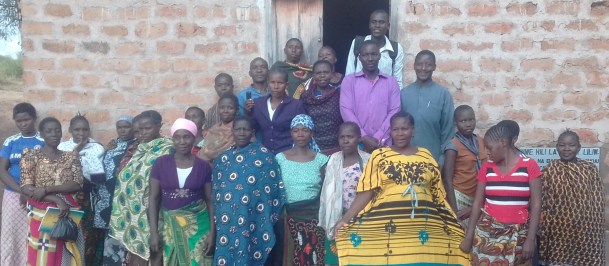
Nimesharudi Hapa Marekani

I returned to America on Friday (The title means “I have already returned here to America”), and I want to tell you about the work we did over the last seven months. I’ll try to tell it like a story, but I imagine it will feel more like reading only the opening pages. It feels the same to me. We’ll write a few more pages together after I return in March 2017.

Once I finished Swahili school in mid-July, I started visiting the church leaders and their families as much as possible, hoping to learn what their lives are like, hoping to see how they think, and hoping that we could come to trust each other.

20161016_125131

20160925_150423

20161015_165850

20161029_145713

On August 2nd, we started doing a weekly asset-based community development program. This program starts by explaining why the church should care about material poverty, then encourages the churches to build relationships with the community, then helps them identify the resources they already have, then teaches them how to make an action plan to mobilize these resources (For a case study, see Ishishangh’olo  or 3272-ccm-case-study-tanzania). As the leaders began to see their responsibility to alleviate material poverty, we brought in Henri Kanyumi, a Tanzanian pastor who has been doing development work with the churches in the Mwanza area for years. He taught them how to start savings and loan groups.

14088865_10157277757915375_2046036277_n
Henri Kanyumi, ladies and gentlemen. He really knows his stuff, as he has been doing Pamoja training for several years here in the Mwanza area.

From the beginning of September until mid-October, the churches searched for group members, and then started saving together. In early November, so many wanted to join the group at Lumala UMC that they decided to split into two groups of twenty members each.

savings-and-loan2
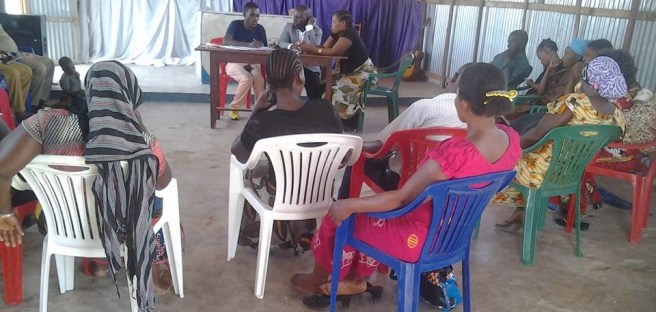
Lumala UMC savings and loan group meeting
savings-and-loan
Lumala UMC savings and loan group meeting


20161105_170626
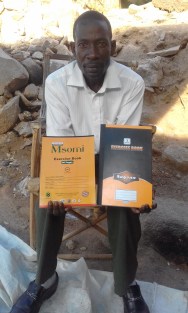
Steven Baruani, secretary of the new savings and loan group, with the notebooks he will use to keep good records.


Through this period, I continued to visit the church leaders as often as I could, for the reasons listed above, but now with the added motive that it helped me to casually monitor the groups. Around this time, I started to see that many of these folks were less interested in being friends than I had hoped, and a lot more interested in what I could give them directly. This has intensified as the months have gone by, making me increasingly thankful for one Tanzanian family who have been consistent and faithful friends. Here I am with them: Zach and Benna Ouko and their daughter Nereah.

20161214_182521


Around mid-October, we hoped to build the shed and water source for the brick machine project, though we could not afford the machine yet. We didn’t want the site to sit unused for several months, so we asked the church to start a project  that would make use of the shed and water until we got the machine. The church made a plan for a garden project at the site, but it was clear that the church expected us to fund and manage the garden. We explained that this wasn’t the case, and that their plan needed to detail how it would be funded and managed. They made a new plan explaining the management but not the funding, so I told them they needed yet another plan. By the time we finished the final plan, it was time for me to leave, so we decided not to do the project.

We have seen the setting and rising action, and even in spite of the challenges, we have a good plan for the next year. I am looking forward to continuing the story in March.

I have tried to keep you informed about our work, but I would love to meet with you, explain more, and answer your questions, now that I am back in America. I will be living in Mobile, but will visit Montgomery, Auburn, and the Wiregrass often. I am looking forward to sharing with you, friends.

Ni Njia Mpya

Six weeks ago, I was thankful to visit the most remote church we work with, Gabimori UMC. To arrive, I travelled about an hour an a half by “small car” (they use “small car” to mean a car that works like a bus, rather than a taxi, always going the same route and waiting til full before leaving). After the small car brought me as close as it could, Musa (pictured below) took me another forty minutes by motorcycle to arrive at the village.

We have also been trying to start building the shed and “bomba” (water source) for the brick machine. While waiting for the machine, we hope Lumala UMC will use the shed and bomba to start a garden, which will increase their income, serve as a test of the church’s ability, and prepare them to manage a larger project.

20161124_172434
This is the plan for the shed, bomba, and garden.
20161019_135300.jpg
A bomba
20161020_083936
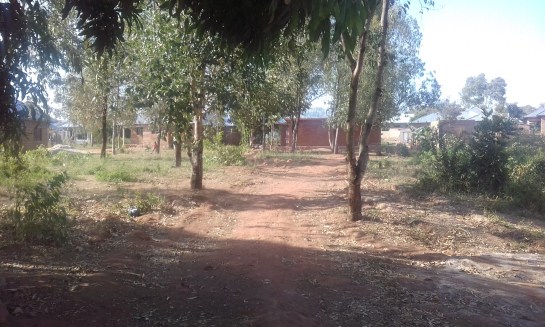
This is where the garden, and later, the brick machine and new Lumala UMC meeting house will be.

In the garden planning and in the visit to Gabimori, I have seen that the leaders are confused by our insistence that they take ownership of their development. When they see mzungu missionaries and hear “development work”, they expect us to pay for and manage large charitable projects. At Gabimori, the Mzee la Kanisa (Elder of the church, pictured above) asked me if we would build a health clinic. I said something like, “We would love to, but we cannot be the ones to manage it. Next year we will train the community leaders to manage projects, and then we may help them start a clinic.” He said that sounded good, but then asked the exact same question about a school, to which I gave the same answer. This was followed by yet another (identical) exchange about us building a soccer field.

When we were planning the brick machine project, I asked two of the leaders what project they could do with the shed and bomba while we were waiting for the brick machine. They said that they could do many different projects, but the problem is that I never want to pay for all the things that they request for the projects. They then tried to convince me to start a larger project by suggesting that I would get more money from it in the long run.

This confusion has been present in many cases besides these two recent examples. The leaders are disappointed by how slow the process is, disappointed that we won’t be providing as much money as they are used to, and doubtful of their ability to ever start and manage the projects themselves.

I am never sure what to say when we have these conversations. I have tried to explain how the old way created dependency, and also that this new approach (the title means “it’s a new path”) has already been effective with churches very similar to theirs in the area (you can click the following links to see more: ShinyangaNyangugeManya Manyama, Ishishangh’olo). At the end of the day though, it will take time for the leaders to come to trust their own abilities. And so, each day is one more day to show them that we really do believe they can do this themselves.

Ishishangh’olo

On November 10, I was thankful to visit some folks in the Ishishangh’olo area who have been doing the asset-based community development and savings and loan plan that we will do with all of the churches that we work with.

Ishishangh'olo.PNG
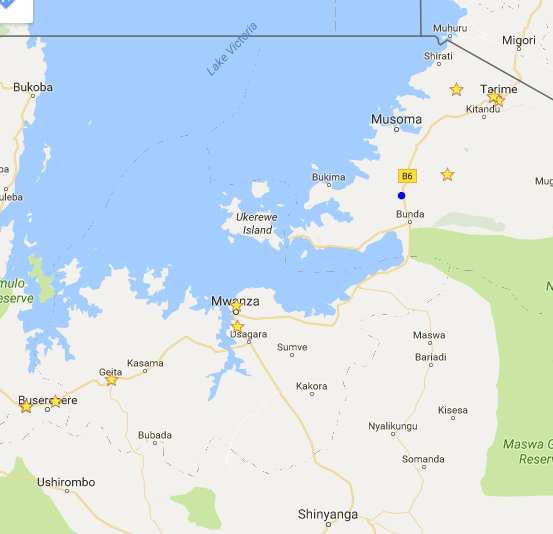
The stars represent some of the churches that we work with. The blue dots represent the three villages we visited – Ishishangh’olo, Sogoso, and Mbaragashi

In late 2014, a church in Sogoso started doing the CCMP plan for asset-based community development. During this process they realized they already had some resources that they were not using:

-Trees

-Land

-An abundance of water makes it possible to make bricks all year round

-Apparently, enormous anthills like the one pictured below are a very useful resource for making bricks. I do not understand why, but I have their word on it.

Pastor Lucas (in purple) and Evangelist Edward took turns telling some of the story.

They talked about how they had gotten saved long ago, and had learned that our relationship with God is about our spiritual development, but it wasn’t until they started CCMP that they started to see that our relationship with God is also about being better able to meet our physical needs. Lucas added that he even started to notice that people were dying spiritually because they weren’t able to meet their physical needs.

Before CCMP, they had been waiting on resources from outside, or for God to provide directly. They knew they could work harder on a daily basis, but they did not think it would get them anywhere.

After CCMP though, they started to see how hard work could be channeled in a way that would actually change things. They knew that they could not afford to pay directly for many of the things they needed to improve their lives, so they started looking for ways to provide without paying cash.

For example, the Ishishangh’olo and Sogoso communities wanted better houses and a church meeting house, and the Mbaragashi community wanted a primary school, but none could afford bricks. So they started encouraging members to make bricks themselves. All it takes is water, mud, and (apparently) anthills, and they had those things.

They started building better houses; Pastor Lucas shared that his house now has six rooms. They also started a savings and loan group to help them meet their physical needs. Finally, they recently started on their brick meeting house.

20161110_124203.jpg
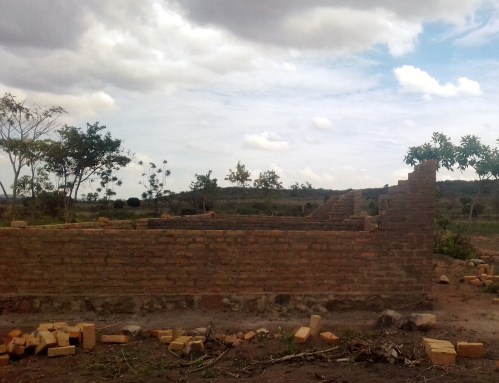
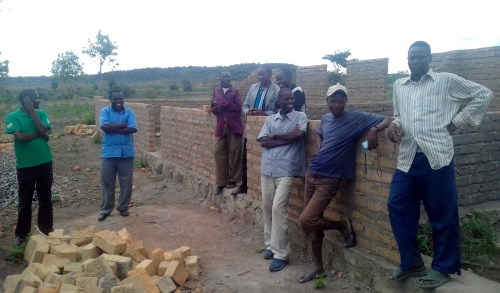
The construction so far on the Sogoso meeting house

Many of the Ishishangh’olo leaders know the Sogoso leaders, and so, were inspired to start CCMP in April 2015. Although they started later, they began began their meeting house almost immediately, and we sat inside the finished product.

The leaders at nearby Mbaragashi also heard, and decided their priority was a primary school. My translator Alphonce, himself interested in building a primary school, asked the Mbaragashi leaders about their budget. One leader (pictured below, in the white striped shirt) replied with something like, “We have no budget, because that way of thinking kept us paralyzed for years. If you draw up a 10,000,000 shilling budget ($4,600) everyone will stay scared, and the building will never start. When the community asks us how much, we just reply, ‘Not too much, all we need is bricks, cement, and foundation stone!’ If we run into trouble paying for things, we take up per-family contributions of 20,000 shillings each ($9.20).”

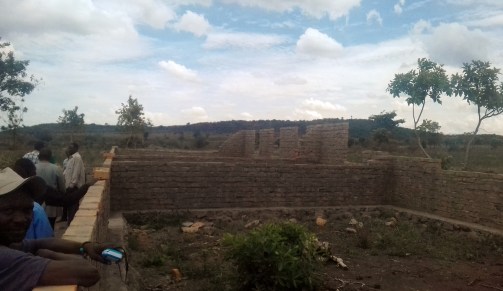
It seems to be working. Here are some pictures of the Mbaragashi primary school, which they started building in August 2016.

20161110_132458

20161110_131007

20161110_132507

20161110_131537

Manya Manyama

On November 11, 2016, I was thankful to visit some folks in Manya Manyama who have been doing the asset-based community development and savings and loan plan that we will do with all of the churches that we work with.

Manya Manyama.PNG
The stars represent the churches that we work with. The blue dot is Manya Manyama, upper-right corner near Bunda.

In mid-2014, a church in Manya Manyama started doing asset-based community development. During this process they realized that they already had some assets:

-People that they see everyday and do business with

-Time, if it is well-planned

-Land

-Trees

-Creativity

After seeing their opportunity to reach out to their community’s physical needs and the resources they had to do so, they decided to start a savings and loan group in November 2014. After only three months they reached the twenty-five member limit and divided into two groups, and then did so again a few months later. When I visited on the 11th, members from all three groups were present.

20161111_173249

20161111_173250
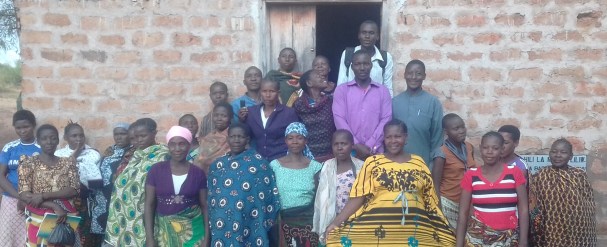
Members from each of the three groups at Manya Manyama.

The members set savings goals and then hold each other accountable towards them. We were late arriving, and they told us they had been talking about their goals while they were waiting for us. They went around the room and told us about some of the goals that were set in the past and achieved:

-Several had bought a motorcycle.

-Several had built a bigger, drier house.

-One woman had plastered the bare brick walls in her house and replaced her dirt floor with a cement floor.

-One woman (the one showing off her yellow dress) bought a bigger bed.

-If people cannot afford window frames, they board up the window holes with bricks. One woman said she had been able to replace the bricks with window frames.

-One woman bought a bike, because she lives far away from any water source.

-One woman had no chairs for her house and was able to buy some.

-The woman in the center, standing to the left of the man in the purple shirt, said she had paid for her son to go to a better school for the last years of his education. He has since finished, gotten a good job, and is really helping the family to get out of poverty.

I was thankful to see that these groups also have a “mfuko ya jamii” (community purse). Members can save different amounts each week, which are then loaned out and finally divided up at the end. However, each member is required to put 1000 TZS (about fifty cents) per week in the mfuko ya jamii. The mfuko ya jamii was created to help members when an emergency arises and they suddenly need a lump sum. They use this most commonly for sickness, paying for a funeral for an immediate family member, and paying school fees, and it is repaid once things have calmed down.

The success of asset-based community development and savings and loan groups in Manya Manyama makes me optimistic about trying it with the UMC churches in the Mara region.

Habari za Kikundi?

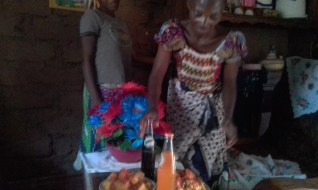
I’m feeling thankful that the savings and loan groups are going well. The title means, “What news of the group?”, a question I’ve asked a lot lately. I was a little worried that the group at Igombe UMC wouldn’t get off the ground, as the pastor there, Pastor Zakaria lives and works in a village over an hour away. It has indeed started though and seems to be going well, courtesy of their dedicated church secretary, Dunia (pictured below, preparing the structure for worship on Sunday). They meet each Sunday, and each member saves 1000 shillings (fifty cents) per week.

Last Friday, the 4th,  I was pretty excited to learn that the group at Lumala UMC has exceeded the twenty-five member limit and split into two twenty member groups, because so many people from the community wanted to join. Here is Steven Baruani, the secretary of the second group, with the notebooks that he will use to ensure that they keep good records.

20161105_170626

I was thankful to see the notebooks, as the main weakness of these groups is their tendency to collapse into quarrelling if they aren’t managed well. At Lumala UMC, the groups meet once a month and each member saves 5000 TZS ($2.50 USD). We would like them to meet more often and save smaller amounts so that poorer members of the community can have access to them, and we have been talking with the leaders about this, trying to get them to make the transition.

I was a pretty disappointed to learn that Nyegezi UMC had not started their group, until the pastor explained why. They have started constructing their church meeting house on their own initiative, and the members are contributing 1000 TZS a week to the construction, which is the amount that they would otherwise be saving. He assured me that they would start their group as soon as the construction was finished. On the left is Pastor Augustino, and on the right, their church building.

Finally, I visited Pasiasi UMC this morning, and the pastor told me they have also started their group, saving 1000 TZS (fifty cents) each week. When we were talking about the group before the service, I accidentally gave the impression that I would make a large contribution to the group so that it could begin loaning. I did not realize this until the pastor announced it to the church after the service, after which I had to apologize and tell the church that was incorrect. The way microfinance groups behave differs greatly from place to place, so I doubt that this is true in all places, but in Tanzania, outside funds tend to hurt, rather than help. The groups stop trying as hard to make sure that the loans are repaid, since it isn’t their money. In spite of this misunderstanding, and the fact that the pastor’s father, Jeremia, is very sick, the group seems to be going well. Here are some of the church members after worship; Pastor John Jeremia is in white on the left.

20161113_123046.jpg

After twelve months have passed from the day each group started, the savings will be divided back up among the group members to give them a lump sum to make some major life-improving investment.

Mzungu Anapika!

Back in July, I was talking to a friend, Leah Wilson, and she asked me what I was doing now that I had finished Swahili school. I told her that I was mainly visiting with families, and that I try to spend most of the day at a family’s house each day. Although I no longer visit someone every day, it is still a priority. On Saturday, for example, some of the leaders of the Lumala Church came over to my house for most of the day.

(Saturday was my first time making the local staple dagaa, on the right. Yes, those are in fact sun-dried minnows. The title means, “the white person can cook!”, something they often say when I prepare Tanzanian food for them.)

On Sunday, I spent several hours after church visiting with the pastor’s family in Nyegezi. (Pretty thankful to be friends with their son, Amani. He wanted a picture wearing my glasses.)

20161030_142530.jpg

Visiting with these folks helps with learning Swahili and how Tanzanians think, with getting a sense of how the development work is going and what the people think about the work, and with building trust.

The pastor and his wife at Nyegezi UMC

(The widow of Rev. Levi Nyasinde lives out in Nyegezi as well. She did not want her picture taken, so I just took a picture of her preparing the greens for our lunch.)

We talk endlessly about the differences between America and Tanzania. They love hearing about how I have such a hard time making their staple, ugali, because my arm is too weak, and how Americans freak out when they are served fish with their heads still intact. We also talk often about the development work. On one occasion, I was eating a piece of watermelon that Mzee (means “elder”) Dentoni thought was too big, and he pulled out a knife and said, “No, Davis. You can’t do it like that. You have to do it like you taught us in CCMP – step by step.” They frequently ask why I am not married and don’t have children. I have tried many ways of explaining it, with little success.

(Visiting with some of the leaders of the Lumala church, in the home of Mzee Dentoni. I couldn’t eat sugarcane like they can, so they graciously cut it up for me.)


Here is Mama Riziki, leader in the Lumala church. She has taken more of a leadership role in our development work than any of the other women of the church.

Before church at Igombe UMC, they served breakfast, and then after, we had lunch together. Pastor Zakaria is wearing red in the middle picture.

The most important reason for spending so much time together, though, is that it helps me to do this work for the right reasons, instead of the wrong ones. The most clear “right reason” for doing this work is that I love these people. It’s hard to love people who you don’t know. And while I am far from deeply knowing and being in love with these people, every meal together brings us a little closer.

Mashine ya Tofali

We are hoping that buying a brick machine will give the youth a small business and help several young churches to build a brick meeting house.

The last seven years have seen the birth of 12 new United Methodist churches here in Mwanza and the Mara region of Tanzania, as well as one in another small city, Geita. Here are a few of their locations, marked with stars. (Many of them cannot be located by Google Maps.)

Churches2.PNG

The speed with which so many churches have been born and the material poverty of their members means that several of these new churches have no brick meeting house. Here are some of the places where they meet:

This isn’t too much of an issue during the dry season, but it does mean that no one comes to church on many Sundays during the rainy season (which began about two weeks ago, by the way!) Sometimes churches will try meeting in someone’s house, but when they do this, that family will begin to feel that the church is theirs.

In preparing to help the largest of the four Methodist churches here in Mwanza to construct its new meeting house (Lumala UMC, top picture), we realized that purchasing the bricks would cost $2,200, while buying a brick machine and the inputs to make the bricks would cost only a little more, $2,755. (For a more detailed, official proposal, you can click here. As you may have guessed, the title means “Brick machine”.) The machine will, of course, be used in the construction of the other meeting houses, so as each additional building is built, the cost per church will be lower and lower.

We are hoping that this brick machine will also help a group of young men who are members of the churches here in Mwanza. Here are some of them:

Top left is Isaac. He is 19, and from a part of western Tanzania called Kigoma. He left Kigoma in December to study English and driving in Kenya, financed by his uncle, who lives in Mwanza. When his uncle went to work in America though, Isaac had to stop his schooling and moved to Mwanza where his aunt and brother live. He was cutting hair for awhile, but the shop he was working at closed. He has since been looking for work but has not been able to find any.

Top right is Edmund Charles. He is 28, and has lived here in Mwanza for four years. He also came from Kigoma, where his father is a Pentecostal pastor. He has a gift for music and serves as the worship leader at Lumala UMC. He is married with two children, Neema and Charles.

Bottom left is Sadi Benja, who is 27. When he was 22 he left his village, Bonco, in southeastern D.R.C., looking for a better life. He worked for awhile making soap from ashes, and then did sewing work for awhile, and is now cutting hair. He has been married for two years and has one child, and would like to return to school to become a driver.

Finally, at the bottom right is Musa, who is 32 and is the Chairman of the youth. He is also from Kigoma. He came to Mwanza 10 years ago, when he married a young woman from Mwanza, and now has three children. He started fishing here in Mwanza for a few years, but now frequently travels 12 hours to the northwest to Bukoba, where he stays for weeks at a time, because the fishing is better there.

The youth will use the machine as a small business, which would give them the opportunity to learn some basic business skills, skills that would in turn help them to move forward with their lives and provide for their families better. They are pretty excited about it. When I first mentioned the idea to them, Barraka, (not pictured) said, “If you could get the machine this Friday, I would be ready to start this Friday!”

Hadithi ya Asteria

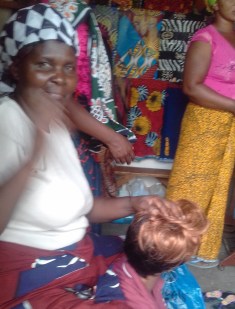
Recently I visited my friend Asteria, who has benefited from Pamoja savings and loan groups and has also helped to start such groups. Since several of the churches we work with here have recently started Pamoja groups, I wanted to hear her story and see what these groups look like in the long-run (the title means, “Asteria’s story”). Here she is, doing someone’s hair:

20160916_111258.jpg

My Kenyan friend Zach came with me and wrote up the following document of our conversation: asterias-story. (The rest of this blog is my summary of it.)

Before the group, Asteria had a small hairdressing salon, consisting of a chair and a desk, where she sat in the chair and did women’s hair as they sat on the floor. She still has this business, as pictured above, which brings in between $15 and $25 each month.

A pastor, Rev. Henry Kanyumi, who has also been helping us with our training, and his friend Dr. Maganga did Pamoja training at their church. They quickly recognized Asteria’s leadership ability, and appointed her to help start a group. She found sixty people who were interested, many right there in the market where she had her business. This was enough members for three groups, so they started the first two groups on November 12, 2014, and a third a few days later.

For the first three months, the members would meet each week and save together, an amount between .50 and $2.50 per week per member. After three months, this had grown enough that they could loan to the members at interest rates which each group set for itself. After nine months of loaning (one year from the group’s beginning) the money was divided and each member received what they had saved in addition to interest from the loans.

After the year was over and the lump sum returned, Asteria was able to buy a sewing machine and fabric, in order to add a sewing business to her hairdressing business (pictured below). We were interested to learn that she waited until the sum was divided to invest, rather than taking out a loan from the group. She said that while group members do benefit from the loans, much more of the benefit comes from the investments that members make with the money returned at the end of the cycle.

She also began constructing a larger house, which is now nearly finished, and replaced her jiko, the typical Tanzanian cook stove, with a small gas cooking stove.

Zach and I estimated that she now makes at least $130 each month. Asteria told us that switching to the gas stove was an investment made by almost all group members after the cycle. This saves money, as gas costs less than charcoal, and it saves about an hour a day of cooking time. They also inhale much less smoke with the gas stove, which is a long-term health hazard for women who consistently cook with charcoal.

At the end of our visit, Asteria showed us many other shops that had benefited from Pamoja. There were too many to keep track of, but I counted at least five selling vegetables and fruits, five selling fish, four sewing/fabric shops, two selling shoes, one selling farm chemicals, and one M-Pesa shop. After seeing the Pamoja method in action, I am feeling optimistic about our fledgling Pamoja groups.

Hisa

This update is a bit longer and more technical than those I have shared so far. It explains in a bit more detail what we are hoping to do with Pamoja groups and why, and it’s written to those more interested in the nuts and bolts. (No offense taken if the rest of you don’t read it!)

But first, some pictures!


This last week, we took five days, paid an experienced facilitator, and trained the leaders of five churches in Mwanza and Geita on doing a church savings and loan group using the Pamoja method. During the next two weeks, they will find members for their groups, we’ll do a few more days of training, and then they will begin saving together.

The need we hope to address:

As Stuart Rutherford says, “The great irony of being poor is that you are too poor to save, but also too poor not to save” (Rutherford and Arora 11). Many of these folks need to have lump sums available at certain times for

  • Emergencies. There are several different examples of this, but the most common is taking a sick child to the hospital and then buying medicine for them. In only 3 months here, there have already been two occasions where someone expressed their anxiety to me about needing to pay for this.
  • Life-cycle events. Funerals and weddings, as in other places, are expensive in Tanzania, and a higher birth rate makes these more common than in the U.S. At the one funeral I attended, the family of the deceased was not only required to provide food for everyone who attended the funeral, but also for everyone who attended the mourning, which lasted several days.
  • Opportunities. The most common and most important of these for our families is paying school fees. Indeed, it isn’t clear whether this should be cast as a opportunity or a necessity. As I spend more time with the Tanzanians and get to know them better, I hear this anxiety more and more often. Not far behind is the need to pay for seeds for planting. In this category are also opportunities to improve one’s situation and even rise out of poverty, such as opening a store or buying a taxi. (Rutherford and Arora 4-6)

Why is saving difficult?

The poor who we work with run into various hurdles with saving. The most prominent are relatives and neighbors who lay claim to any savings kept in the house, thieves, and the fact that traditional banks are not interested in deposits of $1 or less each day. (Rutherford and Arora 2)

How do Tanzanians attempt to meet this need?

Tanzanians use many methods, with varying success, advantages, and disadvantages. The three most common, though, are:

Livestock. Chickens, ducks, goats, and cows populate the streets and houses of Tanzania. I took the following pictures within 5 minutes of each other on my way home one day. The Tanzanians I talk to are surprised, and think it is pretty funny when I tell them this is not the case in the U.S. Tanzanians purchase livestock when they have a large lump sum of cash, and can sell them later when they need a lump sum. This way is troublesome though, as livestock can only be sold for fixed amounts, are expensive to feed, and may die suddenly. Indeed, Tanzanians purchase livestock as a small business and for prestige (see note at the end) as well, so saving may only be a background motive here.

Merry-go-rounds. (My Kenyan friend Zach told me these are called merry-go-rounds by English speakers in Kenya. I don’t know their Swahili name.) The way these work is that the members (15 or so) meet each day (or week, or month, depending on the group) and each puts in a certain amount, say 5000 shillings, roughly $2.50. Afterwards, one of the members takes the full amount, 75,000 shillings, roughly $37.5o. This continues each week until each of the members has had their turn to receive the sum. In the end, each member gets out only exactly what she or he put in, but it helps to satisfy the recurring need for lump sums.

Phone money. Almost anywhere I go in Tanzania, urban or rural, I see “M-Pesa” shops. These pictures were also taken within five minutes of each other on my way home. They are as common as stands selling fruits and vegetables; the nearest one is about a three minute walk from my house. Tanzanians who have an account with Vodacom, one of the largest cellular providers in the country, can (for a fee) save, withdraw, and send money at these small shops, starting with amounts as small as 300 shillings, roughly fifteen cents. They can check their balance via their phones, and even buy minutes via the money they have in their M-Pesa savings. M-Pesa also offers loans, although the process is a bit more complex. When I have asked Tanzanians how they save, “M-Pesa” is the most common response. In order to better understand this, I have opened an account myself, although with a different cellular provider, called Airtel Money.

Why Pamoja, when they have these other options?

Pamoja is a savings and loan group, of between five and twenty-five members who agree to put in some savings each week (the amount can vary, and these are called “hisa”). After this fund builds up, it can be used to meet the savings needs discussed above. In the Pamoja method, the members of a church are taught how do this, and they go find others in their community (often those who are not Christians) with whom to start a group. In this way, one church may start several groups, and this is what we are hoping for with our churches here in Mwanza. Why go to all this trouble though, when they have have merry-go-rounds and phone money?

First, the Pamoja savings and loan program has proven to improve living standards in quite a few churches in our area. I was thankful to meet and talk with one woman, Azteria, who was an example of this, and I have discussed our meeting some here.

There are technical reasons for this as well. It improves on the merry-go-round in that the members need not put in the same amount each week. If they have more to save one week, they can save more, and if one week has been rough, they need not drop out of the group simply because they cannot save as much that week. It also allows members to access the money they have saved whenever they need it, as opposed to the merry-go-round, where the members can only receive the lump sum at a certain preset time.

It improves on phone money in that there are no fees for saving and withdrawing. Indeed, a Pamoja group might even choose to charge a small interest rate on the loans it makes to its members, in which case the other members of the group will make money, rather than paying. (Rutherford and Arora 27-31) As a loan resource, it has the advantage that the members will likely charge a lower interest rate on the loan than M-Pesa, and the group is more familiar with its members, and whether a member is in a good position to receive a loan. An unfortunately common problem with many large-scale microloan providers is their tendency to make loans to clients who cannot repay, and to subsequently seize the few possessions the client has as payment for the debt.

What are we worried about?

We are encouraged about the advantages that Pamoja has over other saving methods, and by its track record. However, I thought I should mention some of our worries, for the sake of honesty, and in case you have some suggestions for how we might better prepare for these.

Pamoja savings and loan groups have more moving parts than other services, and moving parts create friction. Members might keep bad records, embezzle the saved money, or simply make groundless accusations that can cause the groups to disband. A second worry is that, as accessible as this service has been to the very poor, there are still some who are too poor to join. Someone who often goes for weeks at a time without any surplus cash will not be able to join, as Pamoja does require semi-regular savings. (Rutherford and Arora 31) Finally, as Azteria mentioned to me during our interview, groups tend to do best when they are formed of members of the same sort of profession, and will sometimes struggle when the members’ professions are quite different from each other.

Work Cited/Further Reading

Much of the way I have presented this is borrowed from the book The Poor and Their Money by  Stuart Rutherford with Sukhwinder Arora, which you can preview here. It is based on years that the authors spent with people who do not have very much money in Southeast Asia, India, and Africa, and Eric Soard said this book, “Explains most of how poor people manage their money, which it took me three or four years to figure out”.

Note: Eric told me one story where they were asking each Tanzanian about one of the happiest days of his life. One of them thought about it for a minute, and then replied, “When I was young, I once had to sell all of my cows when I moved to a new place. One day a livestock trader came through and I had some extra money, so I was able to buy two cows. I was very happy, it was one of the happiest days of my life.”
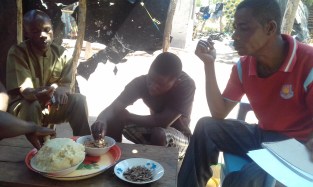
Huwezesha

We recently started doing Church and Community Mobilization Processes training with the leaders of all three churches in the Mwanza district. This will teach them why the local church should care about development, how to identify the resources in their church and community, and how to take action using these resources (the title means, “to enable”). One week we went over several important elements of development with these leaders. They made five groups, with three or four in each group, and we asked them what each element meant to them. I was hoping it would help you connect with them a little bit if you could see their answers, so here they are. (Each bullet point is an answer from a different group. There aren’t five listed for each one because with some answers, I couldn’t make heads or tails of the Swahili.)

Development:

  • When someone leaves one lifestyle and enters into another
  • Acting for the improvement of the life of the community’s economy, health, environment, and food
  • A step forward
  • Success in getting a person to take a step in lifestyle, thinking, knowledge, or economy

Community

  • A group of people that live together, that interact within a language and culture
  • People that go around each other
  • A union of different people that live in one place together

Dependency

  • Someone who depends on or expects from (the word “tegemea” was used here, it can be used for either “expect” or “depend”) the people
  • To work by hand
  • Someone or something that expects or depends
  • Someone who expects to be given or depends on being given assistance from other people
  • Someone who is not able to depend on herself or himself alone, so another must help

Resources

  • The things of the people
  • The family, together with their plots of land
  • The tools for work (people, things, money, time)
  • Things that you yourself possess
  • Things that a person has, that they can use for for development

Poverty

  • Inactivity with regard to knowledge or vision
  • Limitations with regard to the needs of the life of man
  • It is the lack of important needs, which influence the life you are able to live
  • It is a deficiency of knowledge or objects

Here are some pictures of the leaders, along with Eric and I.